


Fashion is a business built on storytelling. And iconic pieces are the clearest, most universal language that luxury brands use to express who they are. A Hermès bag is never just a bag. A Chanel jacket isn’t just a jacket. These pieces carry history, strategy, and emotional connection.
If you want to work in fashion, recruiters expect candidates to know when they talk about brand DNA. Whether your goal is to build a career in merchandising, PR, styling, buying, design, or marketing, understanding a brand’s signature pieces will instantly elevate your professional fluency.
Indeed, understanding iconic fashion pieces isn’t just ‘for fun’ — it’s essential knowledge for anyone who wants to break into fashion.
The people who grow inside this industry aren’t simply the ones who love style or follow trends. They’re the ones who understand how fashion speaks, how brands communicate through products, and how a single bag, jacket, fragrance, or pair of shoes can define a maison for decades.
How Industry Pros Use This Knowledge
Fashion professionals reference signature pieces to:
- Understand brand codes and ensure creative work aligns with them
- Create editorial, design, PR, and styling concepts anchored in heritage
- Communicate products with accuracy and confidence
- Predict which archival pieces may return in future collections
- Evaluate commercial potential and consumer behavior
One of our missions at Glam Observer is to teach our students how to think like insiders: to analyze brand DNA, decode heritage, recognize commercial heroes, and articulate why certain products become symbols of luxury.
That’s why we built this guide of 10 luxury brands and their signature pieces, designed as a professional reference you can use for:
- Job Interviews
- Portfolio building
- Trend research
- Brand analysis
- Styling
What You’ll Learn in This Article
By reading this guide, you will learn:
The signature pieces that define major luxury brands
From century-old icons to modern bestsellers shaping today’s fashion landscape.
Why each product became iconic
With brief explanations tied to the symbolism and brand identity.
Historical facts and dates
So you can contextualize the different launches and speak with precision.
Good-to-know interview points
Short, memorable insights you can use as talking points in job interviews to show deep understanding of the product range.
Why most iconic pieces are bags and shoes
By the end, you’ll be able to talk about luxury brands in a way that is informed, strategic, and aligned with how insiders think — a huge advantage in any fashion career path.
Ready to dive in? Let’s go!
10 LUXURY BRANDS & SIGNATURE PIECES
1. CHANEL
Classic Flap Bag (1929, reintroduced in 1955)
- History fact: The bag was first introduced on the market in 1929, but it wasn’t until 1955 that Coco Chanel named it 2.55 after the date of its creation – February 1955. It was reinvented by Karl Lagerfeld in the early 1980s as the modern evolution of Coco’s 2.55.
- Why it’s iconic: Its CC lock, chain strap, and quilting are instantly recognizable symbols of Parisian luxury.
- Good to know for interviews: This was the first bag not to be carried by a top handle or as a clutch, but with a shoulder strap, inspired by the straps found on soldiers’ bags. Chanel freed women from the constraints of the impractical clutch, leaving their hands free or simply putting them in their pockets, as Coco herself liked to do. Today, The 2.55 is considered the blueprint for all modern Chanel bags.
Tweed Suit (1954)
- History fact: The first iterations of tweed appeared in Chanel’s collections the 1920s after Coco discovered it while living in Scotland. The tweed suit was officially introduced in 1954 on the occasion of the reopening of the headquarters of the Chanel House, at 31 rue Cambon in Paris.
- Why it’s iconic: Blended masculine tailoring with feminine ease, revolutionizing women’s wardrobes.
- Good to know for interviews: Tweed is a non-negotiable brand code, appearing in almost every RTW season in new colors and proportions.
Two-Tone Slingbacks (1957)
- History fact: Crafted by the shoemaker Massaro and introduced in 1957.
- Why it’s iconic: The shoe was designed to elongate the leg and visually shorten the foot. The Beige and black became a timeless combination tied to Chanel style.
- Good to know for interviews: Remains a high-volume shoe in modern retail assortments.
Little Black Dress (1926)
- History fact: Introduced in the pages of Vogue in 1926 as a revolutionary dress, a symbol of modern elegance.
- Why it’s iconic: Initially reserved for mournings, the black dress democratized everyday womenswear and became a universal wardrobe essential.
- Good to know for interviews: Coco Chanel’s LBD is often called “fashion’s Ford Model T.”
Trending Modern Chanel Pieces
- Mini Flap Bag – First introduced in 2010 as a downsized version of the Classic Flap, the Mini quickly became a street-style and social-media favorite, especially among younger clients.
- Two-tone Ballerinas – Launched in Karl Lagerfeld’s SS1984 collection and continuously reissued, these ballet flats have surged back in the 2020s with the balletcore trend while remaining a daily-uniform piece for loyal Chanel clients.
- Double C Earrings – Evolving from Chanel’s costume jewelry tradition that started in the 1920s, the interlocking-C studs and hoops are now among the brand’s most gifted and most photographed accessories.
- J12 Watch – Launched in 2000 under artistic director Jacques Helleu, the ceramic J12 became one of the first true watch icons of the 21st century and remains a pillar of Chanel’s watch division.
- Costume Jewelry – Building on Coco Chanel’s rejection of traditional fine-jewelry rules in the 1920s, contemporary collections of chains, cuffs, and logo pieces are still key to the house’s image, styling, and revenue.
2. HERMÈS
Birkin Bag (1984)
- History fact: Ideated on an airplane in 1981 after a conversation between Jane Birkin and Jean-Louis Dumas – the executive chairman of Hermès himself, and launched in 1984.
- Why it’s iconic: Besides being named after the iconic Jane Birkin, the bag is a symbol of pure craftsmanship and scarcity – one of the most expensive and hardest to get.
- Good to know for interviews: Made from supple leather, the original style was based on an earlier design, the Haut à Courroies, created by Hermès around 1900. Hermès rarely advertises the Birkin — exclusivity drives demand.
Kelly Bag (1930s / renamed in 1977)
- History fact: Originally known as the “Sac à Dépêches”, (“dispatch bag”) it was designed in the 1930s by Hermès’ CEO Robert Dumas (the son-in-law of Emile Hermès, grandson of the founder Thierry Hermès) to transport papers and files. It was adopted by the fashionable women of the day as an elegant and practical bag. In 1977, it was renamed “Kelly” after Grace Kelly, who wore it in the movie To Catch a Thief and off-set, famously using it to conceal an early pregnancy in 1956.
- Why it’s iconic: One of the first handbags and connected to royalty – a symbol of practicality tied to timeless elegance.
- Good to know for interviews: The bag is based on the model of the brand’s “Haut de Courroies” saddle bag created in 1892 that was meant to carry equestrian equipment. It also became the archetype for other Hermès bags, including the iconic Birkin.
Carré Silk Scarf (1937)
- History fact: The first Hermès scarf designed in 1937 (exactly 100 years after Thierry Hermès founded his namesake House) by Robert Dumas, who was a member of the Hermès family.
- Why it’s iconic: An artistic canvas showcasing hundreds of illustrated motifs.
- Good to know for interviews: The first Carré scarf was called “Jeu des Omnibus et Dames Blanches” and was actually made of woodblock (not silk). Each scarf can take up to 6-18 months from design to production.
Oran Sandals (1997)
- History fact: Introduced in 1997, the Oran sandal was designed under Pierre Hardy, who served as Hermès’ creative director for shoes from 1990 to 1999. The sandal features the now-famous “H-cut” upper — a shape inspired by the clean, utilitarian lines of traditional leatherworking.
- Why it’s iconic: Minimalist, timeless, and instantly recognizable, the Oran is one of Hermès’ most widely worn pieces, embodying effortless luxury that transitions from city to resort with ease. Its simple construction highlights the maison’s uncompromising leather craftsmanship.
- Good to know for interviews: The Oran is one of Hermès’ highest-volume products across all markets — especially in summer — and plays a major role in introducing younger clients to the brand. It’s a perfect example of how Hermès balances accessibility (within brand context) with unmistakable craftsmanship.
Trending Modern Hermès Pieces
- Picotin Bag – Introduced in 2002, the Picotin is a minimalist bucket bag inspired by horse-feed buckets and has recently become a Gen-Z favorite thanks to its relaxed, ’90s-adjacent silhouette.
- Chypre Sandals – Launched in 2021 as a chunkier, sporty evolution of the Oran sandal, the Chypre has developed wait-lists of its own and is now a go-to “quiet luxury” summer shoe.
- Mini Lindy – A shrunken version of the Lindy (originally introduced in 2007), the Mini Lindy appeared in the FW2019 show and quickly became an in-demand casual day bag for younger Hermès clients.
3. LOUIS VUITTON
Keepall (1930)
- History fact: Introduced in 1930 under Gaston-Louis Vuitton, the Keepall was created as a revolutionary lightweight alternative to the rigid travel trunks that defined early Louis Vuitton. Its name reflected the growing spirit of modern travel — “keep all” your belongings in a single, flexible, soft-sided bag designed for speed and movement.
- Why it’s iconic: The Keepall embodies Louis Vuitton’s most fundamental identity: travel. Made of monogram canvas that is both durable and flexible, it became the symbol of le voyage and one of the first pieces to transition LV from trunk maker into a global luxury accessories brand. Its timeless shape — unchanged for nearly a century — makes it a cornerstone of the maison’s heritage.
- Good to know for interviews: The Keepall is often the first canvas piece clients purchase and is also one of the most frequently reinterpreted items through collaborations (think Takashi Murakami, Yayoi Kusama, Pharrell Williams). Its role in maintaining LV’s travel storytelling is essential for merchandising and marketing conversations.
Speedy Bag (1930s, Speedy 25 in 1965)
- History fact: Introduced in 1930 by Gaston Louis Vuitton (the founder’s grandchild) the bag was initially released under the name “Express”, reflecting the travel revolution of the beginning of the 20th century. The popularity of the bag reached its peak thanks to Audrey Hepburn, who was often seen carrying the bag and requested to have it made in a smaller size – the Speedy 25 – and this new style soon became a hit.
- Why it’s iconic: One of the earliest everyday handbags bridging luggage and fashion. It was designed to be carried around not just for travel but for everyday purposes, though thanks to its cotton-monigram canvas design, it could be easily flattened to fit into a suitcase.
- Good to know for interviews: Speedy has been reimagined many times. In 2011, the Speedy Bandoulière was introduced with an adjustable, detachable shoulder strap. In 2015, Nicolas Ghesquière, the current creative director of Louis Vuitton designed new versions – the Speedy Damier Ebene and the Speedy Damier Azur. And in 2023, Pharell Williams gave Speedy a makeover during his debut show with a miniature version and a $1 million yellow bag.
Neverfull (2007)
- History fact: Released as LV’s lightweight, everyday tote bag designed to go anywhere — from the office to the beach, from grocery runs to shopping sprees, and travel days.
- Why it’s iconic: Durable (can hold over 100 kg!), versatile, and globally bestselling.
- Good to know for interviews: With its accessible price point, the Neverfull is often called a “gateway bag” into the world of high fashion and is a major driver of entry-level luxury sales, with one of the highest sell-through rates in LV history. Most recently, the house introduced the Neverfull Inside Out — a reversible version crafted in both leather and canvas — launched in September 2024.
GO-14 (2014, revived 2024)
- History fact: Introduced for AW 2023, Go-14, which stands for ‘’Ghesquière October 2014′, is reminiscent of Nicolas Ghequière’s debut show in 2014. The GO-14 features the maison’s historic malletage quilting — a padded diamond motif inspired by the lining inside LV trunks.
- Why it’s iconic: The GO-14 represents the perfect bridge between Louis Vuitton’s trunk-making past and its modern avant-garde aesthetic. The malletage quilting references 19th-century heritage, while the sculptural, structured silhouette aligns with Ghesquière’s futuristic design language. It stands out as one of the few contemporary bags with direct archival construction codes.
- Good to know for interviews: Because the GO-14 is both deeply rooted in brand history and positioned as one of today’s hero bags, it’s an excellent example to mention when discussing “new icons.” Recruiters appreciate when candidates can identify a current signature piece that illustrates how a heritage brand evolves. For 2026 interviews, the GO-14 is one of the strongest updates you can name.
Trending Modern LV Pieces
- LV Trainer Sneakers – Designed by Virgil Abloh and unveiled for the Spring–Summer 2019 menswear collection, the LV Trainer blends vintage basketball references with luxury details and has become a cornerstone of LV’s sneaker business.
- Capucines – Launched in 2013 and named after Rue des Capucines, where Louis Vuitton opened his first store, the Capucines line represents LV’s highest level of leather craftsmanship and is a favorite for ambassador campaigns and arty collaborations.
4. GUCCI
Horsebit Loafers (1953)
- History fact: Launched in 1953 by Aldo Gucci, son of Guccio Gucci. The “Horsebit” references horseback riding, a nod to the brand’s equestrian roots.
- Why it’s iconic: A universal symbol of polished Italian style.
- Good to know for interviews: The horsebit is one of Gucci’s oldest and most consistent brand codes, performing strongly in both men’s and women’s categories. The original 1953 Horsebit design has barely changed since its first release, but the Florentine house has reimagined it in a slimmer shape and Horsebit – the Gucci Joordan loafer.
Jackie Bag (1961)
- History fact: Created in the 50s, this bag was originally named “Fifties Constance”. The former First Lady of the United States, Jackie Kennedy, was among its biggest admirers and collectors, and was regularly photographed wearing her beloved Gucci bag everywhere. So in 1961, the brand decided to rename it in her honor.
- Why it’s iconic: Its clean hobo silhouette epitomizes effortless elegance.
- Good to know for interviews: The Jackie was reintroduced successfully under multiple directors: Tom Ford (1999), Frida Giannini (2009, 2014), Alessandro Michele (2020) and Sabato de Sarno (2023).
Bamboo Bag (1947)
- History fact: Originally known by its product number 0633, it was created in bamboo due to post-war material leather shortages.
- Why it’s iconic: The signature handle and turn-lock closure are both bamboo-made – lightweight and durable.
- Good to know for interviews: To this day, every Gucci Bamboo handle is made by hand by skillful artisans, who carefully lacquer it to achieve a glossy appearance.
Flora Scarf (1966)
- History fact: Created after Princess Grace of Monaco during her visit at the flagship in Milan in the early 1960s and officially introduced in 1966.Inspired by her elegance and femininity, Rodolfo Gucci commissioned Italian artist Vittorio Accornero de Testa, who worked for the House of Gucci between 1960 and 1981, to create an original silk scarf for her. The result was a masterpiece of 43 types of flowers, plants, and insects painted in 37 colors against a white background of the luxurious silk twill.
- Why it’s iconic: The botanical print is one of Gucci’s most enduring signatures and a blueprint for the brand’s ready-to-wear, handbags, and fragrances.
- Good to know for interviews: The choice of the name given to the scarf and the print is a tribute to the city of Florence, where Gucci originated in 1921, and Botticelli’s painting, Primavera (Spring), which depicts the nymph Chloris reborn as Flora in a gown full of all sorts of flowers.
Trending Modern Gucci Pieces
- Gucci Blondie – Introduced in 1971 when Gucci patented its now-famous interlocking G-motif and revived by Alessandro Michele at the 2019 Love Parade collection, as well as Sabato de Sarno in the Cruise 2025 collection.
- Horsebit Chain Bag – Released in 1955 and reintroduced as a star piece of the Fall 2023 collections, this Y2K Tom Ford–era design came back just before Sabato De Sarno’s debut, and is now positioned as one of the house’s lead evening bags.
- GG Platform Clogs – These Horsebit-and-GG-adorned clogs, popularized around 2023, translate Gucci’s maximalist spirit into an easy, everyday shoe that shows up heavily in influencer and celebrity styling.
5. PRADA
Nylon Backpack (1984)
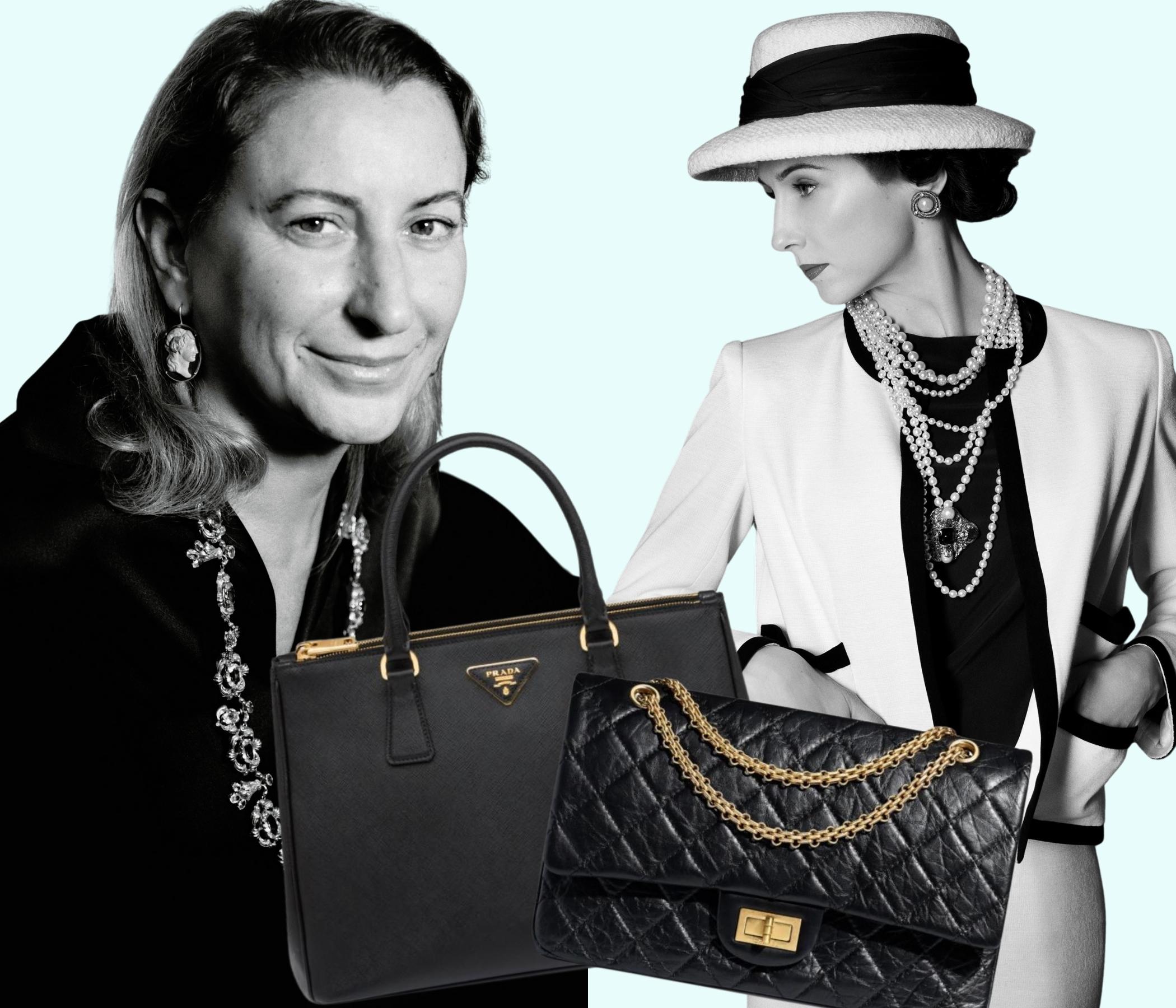
- History fact: Miuccia Prada introduced the Vela backpack in 1984, crafting it from water-resistant nylon called “Pocono”, used in military tents in WWII.
- Why it’s iconic: It was the first product made of nylon released by Prada, and transformed utilitarian nylon into luxury.
- Good to know for interviews: In 2019, Prada introduced the Re-nylon Re-edition of 2000 and 2005 bags, later expanding the Re-nylon product range into ready-to-wear, accessories, and footwear made from synthetic nylon material for Econyl.
Galleria Bag (2007)
- History fact: Introduced by Miuccia Prada in 2007 and named after Prada’s original 1913 location in Milan – Galleria Vittorio Emanuele II. The bag is inspired by the medicine bags of the 1950s, which had a similar practical shape and timeless design.
- Why it’s iconic: Clean, structured, and ideal for professional women.
- Good to know for interviews: The bag is made of 83 pieces, all hand-stitched using Saffiano leather and topped with the signature Prada triangle logo
Trending Modern Prada Pieces
- Prada Arqué and Cleo Bags – Currently trending. – The Cleo, launched in 2020 from Prada’s 1990s archives, and the Arqué, introduced for Fall 2023, both under Miuccia Prada and Raf Simons, reinterpret ’90s minimalism through curved, sculptural shoulder-bag silhouettes that dominate current Prada campaigns.
- Le Loafer (Lyst Index Q3 #2 hottest product) – Le Loafer, which first appeared in the spring/summer 1991 collection, has become a street-style uniform piece and a data-proven hit, ranking second-hottest product on the Lyst Index for Q3 2025.
- Monolith Boots – First seen on the Autumn/Winter 2019 menswear runway and then in women’s collections, the Monolith’s chunky sole and utility pockets helped kick-start the late-2010s/early-2020s combat-boot boom.
- Symbole Sunglasses – Revealed in 2021, the Symbole line turns Prada’s triangle logo into three-dimensional temples, making it a hero accessory in current collections.
6. DIOR
Bar Jacket (1947)
- History fact: Debuted in Dior’s first, 1947 “New Look” collection.
- Why it’s iconic: Cinched waist and sculpted hips defined post-war femininity.
- Good to know for interviews: Always reference the Bar Jacket when asked about Dior DNA.
Lady Dior (1995)
- History fact: Created in 1995 by Gianfranco Ferré, the creative director at the helm at Dior between 1989 and 1997. It was originally called “Chouchou” (meaning “favorite” in French) before being renamed after Princess Diana the same year.
- Why it’s iconic: The Cannage quilt, inspired by the Napoleon III chairs Christian Dior used in his first show in 1947 and the timeless symbol of Dior elegance.
- Industry notes: A global bestseller with continuous reinventions.
- Good to know for interviews: The bag has been reimagined in a variety of prints, colors, and sizes worth studying.
Saddle Bag (1999)
- History fact: Created by Dior’s former creative director John Galliano and was introduced in 1999 in his Spring Summer 2000 ready-to-wear show. As its name suggests, the bag’s shape reminds of a horse’s saddle, inspired by the equestrian style.
- Why it’s iconic: The Dior Saddle was undoubtedly the it bag of the first half of the 2000s, but it disappeared from the radar between 2007 and 2014 when it was revived thanks to a viral photo of Beyoncé.
- Good to know for interviews: Later, Maria Grazia Chiuri’s revival of Dior Saddle in 2018 doubled its popularity among Gen Z.
Trending Modern Dior Pieces
- Lady D-Joy Bag – Introduced in 2022 under Maria Grazia Chiuri, the Lady D-Joy is a reinterpretation of the Lady Dior that has quickly become a favorite for clients who want the icon in a more contemporary, elongated format.
- Dior Book Tote – Launched for Spring/Summer 2018, also by Maria Grazia Chiuri, the Book Tote helped kick-off the “logo mega-tote” era and remains one of Dior’s most important leather-goods pillars.
- Walk’n’Dior Sneakers – Debuting in 2019 as part of Chiuri’s push toward couture-meets-sportswear, the Walk’n’Dior low-tops and platforms combine the Dior Oblique canvas with casual sneaker silhouettes.
- Dior Lingot & Gallop Bags (New Leather Icons) – The Lingot line, designed by Kim Jones for Dior Men Spring 2022, and the Gallop sling bag, which translates Saddle-bag codes into a more unisex crossbody shape, are positioned as modern, functional icons within the men’s and unisex leather-goods offer.
7. SAINT LAURENT
Le Smoking (1966)
- History fact: First tuxedo designed specifically for women, launched in YSL’s Fall-Winter 1966 collection.
- Why it’s iconic: Challenged gender norms and defined YSL’s sharp aesthetic.
- Good to know for interviews: Can you believe that in the beginning, only one piece sold? But when the designer opened his ready-to-wear boutique on Paris’s Left Bank in September 1966 and unveiled his more affordable Rive Gauche line, which included a lower-priced version of Le Smoking. Le Smoking turned into a classic piece and was included in every collection until 2002 when Yves Saint Laurent staged his last runway and retired. Today, tailoring remains core to every YSL collection.
Mondrian Dress (1965)
- History fact: Inspired by Piet Mondrian’s paintings.
- Why it’s iconic: Merged art and fashion in a groundbreaking way to create “art couture” – among the first garments to do so.
- Good to know for interviews: Yves Saint Laurent was an avid art lover and took inspiration from many other artists like Vincent Van Gogh, Georges Braque, and Henri Matisse for his designs.
Pea Coat (1962)
- History fact: Introduced at the 1962 fashion show.
- Why it’s iconic: It was an item borrowed from men’s closets and the military, and it stood out against the trendy New Look at the time.
- Good to know for interviews: It was literally the first piece YSL presented under his own name for his eponymous brand.
Sheer Look (1966)
- History fact: In 1966, Saint Laurent designed the most emblematic example of the nude look: a see-through blouse and a completely transparent chiffon dress with a belt made of ostrich feathers. Why it’s iconic: The piece debuted during a moment of cultural liberation.
- Good to know for interviews: The sheer blouse has since become one of the strongest recognizable codes of Saint Laurent, and Anthony Vaccarello still references it regularly.
Trending Modern Saint Laurent Pieces
- Icare Maxi Bag – Introduced around 2022 under Anthony Vaccarello, the oversized, quilted Icare tote with its bold metal Cassandre logo became an instant celebrity favorite and a symbol of Saint Laurent’s new “quiet-but-loud” luxury.
- Le 5 à 7 Bag – Debuting in the Spring/Summer 2021 collection, this compact shoulder bag has quickly turned into a modern classic for Vaccarello’s Saint Laurent, often cited by editors as one of the most enduring new-generation bags.
- Cassandre Slingbacks – Recent seasons under Vaccarello have seen the rise of sleek slingback pumps and sandals featuring the sculptural Cassandre logo, turning them into instantly recognizable, logo-driven evening staples for the house
8. LOEWE
Amazona Bag (1975)
- History fact: Introduced in 1975, the Amazona was created during a period when women were entering the workforce in greater numbers and needed a bag that was elegant, lightweight, and functional.
- Why it’s iconic: Known for its soft-grained nappa leather, structured silhouette, and effortless practicality, the Amazona quickly became a Spanish luxury symbol and a core part of Loewe’s pre-Anderson identity.
- Good to know for interviews: Jonathan Anderson reintroduced updated versions at the fall 2021 show that celebrated the 175th anniversary of Loewe, demonstrating how Loewe balances heritage preservation with contemporary design. A good topic to discuss brand evolution!
Flamenco Bag (1970s, revived 2010 and 2021)
- History fact: Originally created in the 1970s, the Flamenco was revived under Stuart Vevers in 2010, and again updated by Anderson in 2021.
- Why it’s iconic: The soft leather, drawstring knots, and fluid silhouette highlight Loewe’s mastery of nappa leather.
- Good to know for interviews: Knowing its multiple revivals shows an understanding of how Loewe cycles archival pieces into modern collections.
Puzzle Bag (2015)
- History fact: it was the very first bag designed by Jonathan Anderson for Loewe, which he introduced during the Spring/Summer 2015 Men’s show.
- Why it’s iconic: Made of geometric leather panels that fold flat, it epitomizes Loewe’s craft-meets-innovation philosophy.
- Good to know for interviews: The Puzzle became the symbol of Loewe’s modern renaissance under Anderson — essential to mention if you discuss brand DNA.
Trending Modern Loewe Pieces
- Loewe Squeeze Bag (2023) – Introduced for FW23, the Squeeze quickly became a viral success thanks to its soft, gathered silhouette, tubular “squeezed” handle, and luxurious nappa leather. It reflects Jonathan Anderson’s commitment to sculptural, touchable leather goods that feel both artistic and wearable.
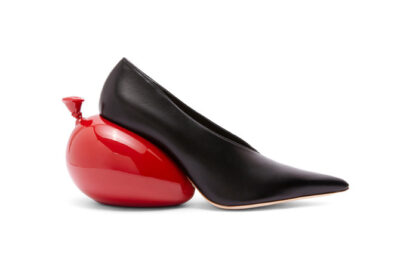
- Loewe Toy Pump (2024) – Debuting in SS24 women’s pre-collection, this surrealist heel — shaped like a tiny “toy” balloon twist — continues Anderson’s exploration of playful, object-like footwear rooted in craftsmanship.
- Loewe Pebble Bucket Bag (2024) – Introduced in SS2024, this bag features a smooth, minimalist silhouette anchored by the iconic pebble hardware. It’s emerging as Loewe’s next contemporary classic due to its clean design and everyday practicality.
- Loewe Comic Boots (2023) – Previewed on the FW23 runway, these exaggerated, cartoon-like boots highlight Anderson’s ongoing fascination with illusion, surrealism, and playful distortion. They have quickly become a standout press and influencer favorite.
9. BALENCIAGA
Sack Dress (1957)
- History fact: Introduced in 1957 by Cristóbal Balenciaga, the Sack Dress (also called the “chemise dress”) eliminated the cinched waist that dominated the 1950s silhouette. This radical, straight, free-falling shape shocked the fashion world and marked one of Balenciaga’s most influential contributions to modern design.
- Why it’s iconic: The Sack Dress was revolutionary because it rejected the hourglass figure entirely, prioritizing purity of line, volume, and architectural shape — principles that became the foundation of Balenciaga’s couture identity. The silhouette paved the way for later innovations such as the baby-doll dress and cocoon coats.
- Good to know for interviews: The Sack Dress is a perfect example of how Balenciaga reshaped women’s fashion by challenging established ideals of beauty and proportions.
Le City Bag (2001)
- History fact: First created by Nicolas Ghesquière for Spring/Summer 2001. Fun fact: it was initially rejected by management for being “too soft,” until models loved it.
- Why it’s iconic: Its slouchy shape, studs, and motorcycle aesthetic defined the 2000s luxury-grunge movement.
- Good to know for interviews: The City bag’s success is a classic example of when a designer’s intuition won against forecasting. It was relaunched in 2024 – one of the most iconic revivals in fashion!
Balenciaga Triple S Sneakers (2017)
- History fact: Introduced by Demna in 2017, designed with the help of footwear expert David Tourniaire-Beauciel.
- Why it’s iconic: The Triple S initiated the “dad sneaker” trend and changed luxury footwear globally.
- Good to know for interviews: A strong case study showing how Balenciaga leads rather than follows trends.
Hourglass Bag (2019)
- History fact: Debuted in 2019, inspired by Cristóbal Balenciaga’s curvilinear tailoring of the 1950s.
- Why it’s iconic: The architectural base curve links modern Balenciaga directly to its couture heritage.
- Good to know for interviews: Perfect example of “heritage reinforcement,” a term recruiters love when discussing creative direction.
Trending Modern Balenciaga Pieces
- Cagole Bag (2022) – Demna’s reinterpretation of the City bag, capturing the Y2K revival with a softer, glam-rock twist.
- Le Cagole Boots (2022) – Knee-high boots from the same line, reinforcing Balenciaga’s edgy, hyper-feminine aesthetic.
- 10XL Sneaker (2025) – One of Balenciaga’s newest viral items, previewed in late 2024 and released in 2025; the shoe exaggerates the oversized silhouette to extremes and is already trending heavily on TikTok and editorial shoots.
10. JACQUEMUS
Le Chiquito (2018)
- History fact: Introduced for FW17, the micro iteration debuted in 2018 and went viral.
- Why it’s iconic: Its exaggerated proportions made it an instant internet sensation and positioned Jacquemus as a pop-cultural force.
- Good to know for interviews: Le Chiquito demonstrates how social media can create a brand-defining icon.
Le Bambino (2020)
- History fact: First presented for FW20, shortly after Jacquemus expanded seriously into leather goods.
- Why it’s iconic: Minimalist, sleek, and elegant — it quickly became the brand’s most commercially important bag.
- Good to know for interviews: The Bambino is Jacquemus’s core bag, strategically positioned to compete with contemporary icons from Prada, Loewe, and Saint Laurent — a smart point to reference in brand-competitor conversations.
Trending Modern Jacquemus Pieces
- Le Valerie Bag (2025) – A recent release, named after Simon Porte Jacquemus’ late mother’s name.
- Le Calino (2023) – A playful, rounded bag embodying the brand’s whimsical identity.
- Jacquemus x Nike Moon Shoe (2025) – Made it to the ‘Hottest Products” list on Lyst Index Q3 2025. This collaboration has cemented Jacquemus’s cultural presence beyond fashion.
Why Most Iconic Luxury Pieces Are Bags & Shoes
Now, you’re probably wondering why most of these iconic pieces are bags or shoes and not ready-to-wear. Well, there are several answers for that.
- Bags and shoes are the most durable categories
Ready-to-wear collections change twice a year, but bags and shoes remain timeless. Although brands do introduce new bags and shoes from time to time, the classic models are sold permanently. Consumers use them for years, giving brands long-term visibility. - High margins for the business
Accessories sit at the top of almost every luxury brand’s financial pyramid: they are the ones that generate the most profit and provide companies with stable revenue (yes, not ready-to-wear!). - They are entry-level luxury items
People often buy their first luxury piece in accessories or fragrances because of their more accessible price point. - They express brand identity in a single glance
Bags and shoes are typically timeless treasures that often become iconic symbols, representing the brand’s legacy and craftsmanship. Unlike fleeting trends, bags are designed to last across generations. While shoes translate RTW vision (think silhouettes, colors, monograms and design features) into accessible trend pieces. - They scale globally
A bag can be sold in every climate and culture, unlike seasonal RTW, so their volume is high.
That said, several ready-to-wear pieces are also part of the “iconic fashion pieces” canon — and the reason they stand out is because they were witnesses and catalysts of radical cultural change. Think of Saint Laurent’s Le Smoking, which challenged gender norms, or Chanel’s Little Black Dress, which democratized one of the most common colors and redefined how women dressed. These garments earned iconic status not only because they were beautiful, but because they captured the spirit of a shifting world.
Most iconic ready-to-wear pieces emerged in the early decades of a fashion house’s life, a period when designers were not just creating clothes but responding to — and often leading — major social, cultural, and political movements. In the 1920s through the 1970s, fashion was directly tied to women entering the workforce, gaining independence, questioning femininity, and embracing new forms of self-expression. A garment could feel revolutionary simply because it introduced a silhouette, a fabric, or a styling idea that society had never seen before.
Today, it’s harder for ready-to-wear to achieve that same level of cultural disruption. We already live in a world where women wear jeans, tuxedos, sheer blouses, and minis without scandal or surprise — items that once caused headlines or social backlash. The silhouettes that shocked in the 20th century have become mainstream, and the boundaries that designers once pushed have already been expanded. This means that while RTW can still be directional and influential, it rarely triggers the kind of collective cultural shift that turns a garment into an eternal icon.
In contrast, accessories — especially bags and shoes — remain fertile ground for newness, desirability, and brand identity, which is why they dominate the modern list of iconic pieces. But the ready-to-wear items that did break through historically continue to matter because they represent the moments when fashion didn’t just change wardrobes — it changed society.
The Takeaway from this Article:
Iconic pieces are more than products — they are condensed brand stories, shaping how a maison is perceived across generations. When you understand the history behind a bag, the cultural significance of a fragrance, or the strategic role of a shoe, you step into a new level of fashion awareness: one that goes beyond trends and taps into the core of how luxury works.
We hope that this style reference will be of great help – whether you’re preparing for an interview, building your portfolio, or simply strengthening your industry mindset, knowing these pieces will help you speak confidently and professionally about the brands you admire. You’ll be able to identify their signatures instantly, understand how each house evolves its DNA, and explain why certain products endure while others fade.
Fashion rewards those who are curious, informed, and culturally aware. And now that you’ve learned the stories behind these pieces, you’re one step closer to thinking like the professionals who shape this industry every day.