
If you are looking for a complete guide on how to structure your fashion CV from scratch, what sections to include, what format to use, and how to write it with no experience, read this first: How to Write a Fashion CV in 2026. This article goes one step further: once your CV is structured, here is how to make it impossible to ignore.
Let’s be honest: in 2026, a CV alone won’t land you the job. It feels a little… outdated. Today’s applications need more than a resume: they need a cover letter, portfolio, and a whole strategy behind how you present yourself (and that’s exactly what I teach step-by-step inside my Break Into the Fashion Industry course and in the Fashion Internship Simulator)
But here’s the catch: recruiters still ask for CVs. In fact, it’s still the first document they scan when they open your application. So the question is not: Should I still send a CV? The answer is yes. The real question is: How do I present my CV so it actually makes recruiters stop scrolling and start paying attention?
In this article, you’ll learn:
- What fashion recruiters expect from resumes in 2026
- 5 golden rules to make your fashion CV stand out
- How to properly write your experiences, projects, and results
- How to treat it like a mini portfolio
By the end, you’ll be ready to build an entirely new resume that gets you job interviews and lands you your dream job in fashion.
How Resumes Worked Before vs. Now
Let’s get this out of the way: formatting, clean design, spelling mistakes — they still matter. You don’t want a recruiter distracted by typos or messy layouts. But those are basics. Everyone already knows them.
But I will say this: What’s changed in 2026 is what recruiters are actually looking for. They want more.
A professional layout? Not enough.
A CV that simply lists your studies and past jobs? Won’t stand out.
They don’t want “nice.” They want “intentional.” Recruiters want to feel, at first glance, that you already belong in their company.
So here are five rules to build a resume that will get you a job in fashion this year (or the next).
Rule N#1: Customize It Like It Was Made for That Company
The most important thing you can do on a fashion resume is tailor it completely to the specific company and role, a generic CV sent to every brand is the fastest way to get ignored.
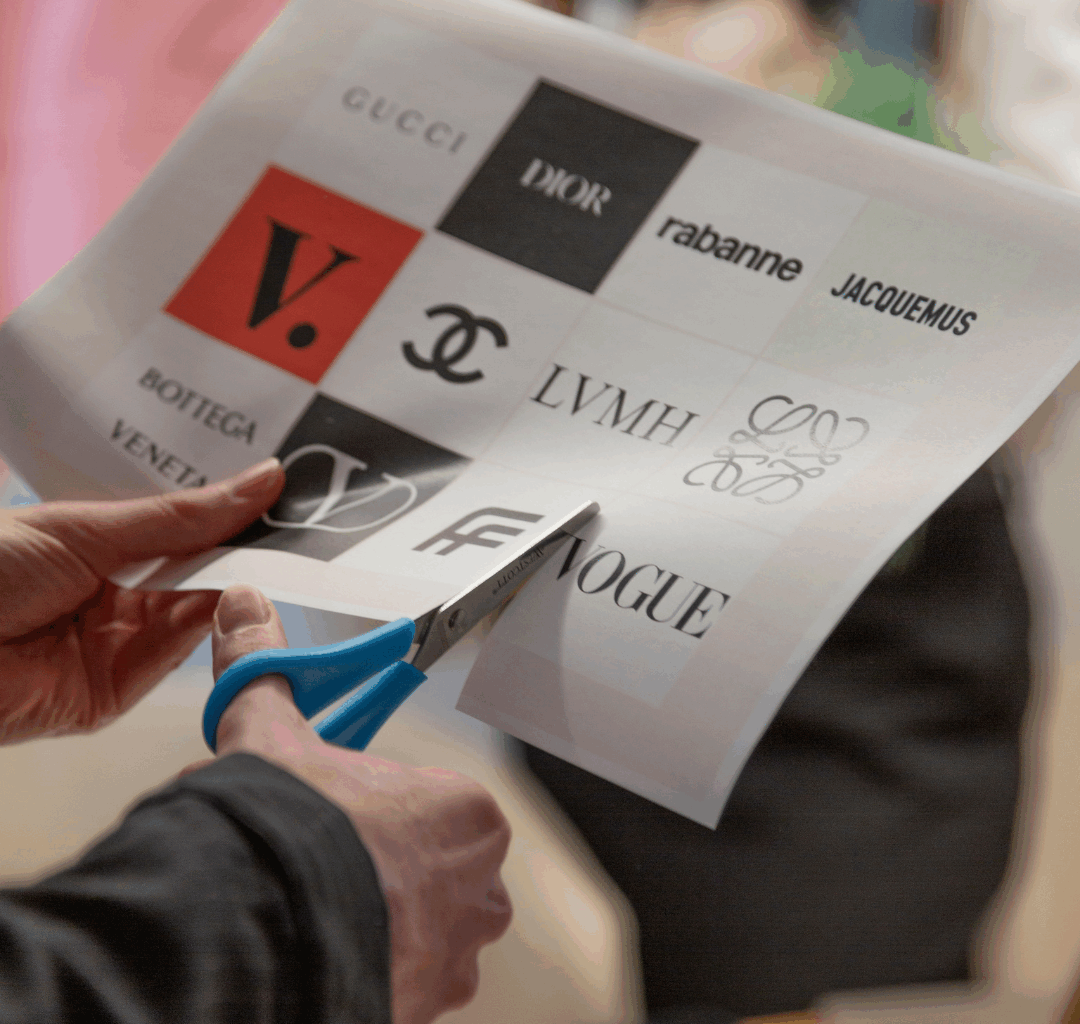
The smartest way to catch a recruiter’s attention in 2026? Make your CV look like it could have been printed straight from their own HR department. That means no generic “one-size-fits-all” CV. If you’re sending the same resume to Chanel, Zara, and Farfetch — you’re already blending into the crowd.
I know, you will say “I don’t have the time to build 20 different versions of the resume”. Bad news: you will probably never stand out. So what do you chose? Keep sending 50 generic applications and waste your time? Or build 5 personalized ones that actually stand a chance?
Yes, it takes more time. But it also makes you unforgettable.
Claim the job title now.
Write your headline as if you were already in the role you apply for:
- “Marketing Internship at Dior”
- “Assistant Buyer at Prada”
- “Visual Merchandising Internship at Louis Vuitton”
- “Editorial Assistant at Vogue US”
It’s bold — and that’s the point. You’re showing recruiters exactly how you see yourself.
Mirror their job description.
If the posting mentions “trend research, data-driven analysis, and market reports” — those words need to be in your CV. Recruiters (and applicant tracking systems) scan for exact matches. Don’t paraphrase too much; speak their language.
For a full breakdown of which keywords to include and how to structure each section, see the complete fashion CV guide.
Brand your layout.
Take subtle inspiration from the company’s visual identity. If you’re applying to Hermès, use a touch of orange. Applying to Balenciaga? A minimalist black-and-white palette works better. Even adding the logo tastefully in the header can show your extra care for the company.
👉Inside my Break Into the Fashion Industry course, I walk you through all the rules to make an unforgettable resume that will WOW recruiters – with templates!
Rule N#2: Quantify Your Fashion Experiences, Even Small Ones
Quantifying your experience, even small projects, immediately makes your CV more credible and easier for recruiters to evaluate.
Luxury recruiters in 2026 are tired of vague lines like “helped with daily tasks.” Instead, they’re impressed when CVs turn even small fashion-related experiences into measurable impact.
👉 Instead of writing:
“Assisted in sample management during fashion week.”
Write:
“Tracked 120+ samples across 8 Vogue Italia looks with 100% on-time returns during internship simulation project.”
Or instead of:
“Worked retail at Zara.”
Write:
“Increased sales by 15% through styling suggestions and upselling, developing customer service skills applicable to luxury retail.”
Rule N#3: Translate Creative Work Into Business Language
Translating creative work into business language shows recruiters you understand that fashion is not just creative expression, it is commercial strategy.
Luxury recruiters see endless CVs filled with lines like “designed a collection” or “styled a photoshoot.” What makes you stand out in 2026 is showing you understand that fashion is not just creative expression — it’s creative strategy with business impact.
Here’s how to reframe common student or self-initiated projects:
👉 Instead of writing:
“Designed a capsule collection for a university project.”
✅ Write:
“Developed a 6-look capsule collection inspired by Louis Vuitton’s travel heritage, integrating sustainable textiles and projected cost per unit for small-scale production.”
👉 Instead of writing:
“Styled an editorial shoot.”
✅ Write:
“Styled a 6-look editorial inspired by Dior FW25 silhouettes, creating a visual narrative aligned with brand DNA. Produced a deck linking the shoot concept to consumer trend reports for Gen Z luxury shoppers.”
👉 Instead of writing:
“Created social media content.”
✅ Write:
“Produced 10 TikTok concepts inspired by Prada SS26 collection, with projected KPIs (reach, engagement, CTR) based on competitor benchmarks.”
👉 Instead of writing:
“Worked on visual merchandising project.”
✅ Write:
“Designed a window display concept for Louis Vuitton Cruise collection, highlighting heritage monogram pieces alongside new season leather goods. Proposed traffic flow strategy to increase dwell time.”
👉 Instead of writing:
“Made a fashion trend mood board.”
✅ Write:
“Built a trend deck analyzing SS26 runway themes, connecting archival references to future consumer demand. Presented as a mock buyer report for Net-a-Porter.”
✨ Why recruiters love this:
It shows you don’t just create — you think like the teams inside Dior, Vuitton, or Prada: balancing aesthetic, brand heritage, and commercial impact.
Rule # 4: Treat it like a Mini Portfolio.
Treating your CV like a mini portfolio, with proof-of-work projects linked directly, sets you apart from the hundreds of text-only CVs recruiters receive every day.
Most people wait until the cover letter or the job interview to show passion or motivation. Big mistake. Recruiters might never get that far if your CV doesn’t first convince them.
Moreover, if you think that on average, 500 resumes are submitted for the same fashion job/internship, and recruiter spends on average 3 seconds on each, you want to grab attention fast beyond the “nice business card” effect.
In 2026, the winners are those who think like hiring managers and show evidence before they’re asked – and across different platforms. Show directly on the resume that you’re not just passionate about fashion, but you’re already doing the work.
How?
Create proof-of-work projects — even if no one hired you yet – and mention them in your CV. If your work experience section has been empty or “too short” – you’ll thank me 😉
Examples of one-day projects you can start right now –— and how to present them in your resume as experience:
👗 Assistant Stylist for a Day: Style a look, source pieces, and build a pull letter just like a stylist prepping a Vogue Italia shoot.
How you can write it on your CV:
Internship simulation for Vogue Italia I Break into the fashion industry course
I stepped into the role of a stylist assistant working on a fictional editorial shoot for the magazine. I assisted with:
- Moodboard interpretation brand and designer research
- Look curation
- Drafting a pull letter
- Sample tracking.
Please refer to my portfolio to see my work.
📝 Editor-in-Chief for a Week: Build a fictional Vogue issue or your own mini magazine on Canva — just like the real editorial team.
How you can write it on your CV:
Editorial Internship Simulation I Break into the fashion industry course
I built an entire mini magazine using AI:
- Planning the theme
- Curating the cover
- Selecting the masthead
- Building editorial and advertising pages.
See my full work in my portfolio.
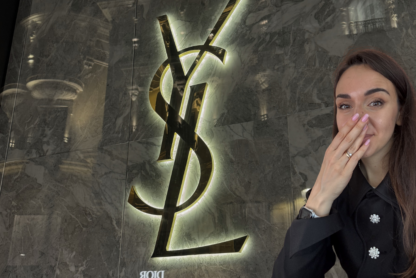
📊 Marketing Assistant for a Day: Plan a retail activation event for Saint Laurent limited edition Le 5 à 7 bag.
How you can write it on your CV:
Marketing Internship Simulation at Saint Laurent I Break into the fashion industry course
I was tasked with contributing to the planning and execution of a high-profile retail activation at Rive Droite to launch the limited-edition of Le 5 à 7 bag. My tasks included:
- Crafting the event mood board
- Conceiving the in-store flow
- Developing the limited product strategy
- Building the competitor analysis
- Curating the guest list.
Please refer to my portfolio to see my work.
And just like that, you have something to show beyond “fashion enthusiast.”
👉 Inside the Fashion Internship Simulator, I guide you in detail through those 3 internship-style “simulations” with 4 portfolio projects where you actually work as an assistant stylist, marketing/PR exec, or editor-in-chief for a day. Recruiters will love those.
- No previous fashion knowledge or experience required.
- All you need is a laptop and an internet connection — I’ll guide you step by step.
Rule #5: Show you’re a (Multi) Skilled Professional
In 2026, most people don’t study one thing, work in the same field, and stay loyal to a single company until retirement anymore. Careers are fluid. Companies pivot. Roles evolve. Which means skills evolve too.
That’s exactly why recruiters in fashion now seek multi-skilled professionals — people who can bring creativity, strategy, digital know-how, and problem-solving together.
Make no mistake: Your CV should first reflect the skills mentioned in the job description aka those that fit the role the most. But truth is, it’s not just about what you can do today, but how versatile you’ll be tomorrow. Secretly, it’s what every company wants: not just a person who can do A, B, C, but also who knows D, E, F. They expect more and you have to be prepared for more.
Therefore, think of a CV not just as a document you build in response to a job description, but a “I can do an extra more”: add a few extra transferable skills in the skills section, present them in your personal intro or under hobbies, or create an entirely new section called “Other added value I can bring to the role” or similar.
Even if you don’t have big-name internships yet, you can still demonstrate value. Don’t underestimate part-time jobs, university projects, volunteer work, or even those portfolio projects we talked above — the skills transfer.
Transferable skills fashion recruiters love to see in 2026:
- Communication skills → from writing sharp product descriptions to pitching PR ideas.
- Analytical skills → spotting trends, using sales or engagement data to inform decisions.
- Digital fluency → familiarity with tools like Excel, Canva, Shopify, Google Analytics, or social media platforms.
- Project management → meeting deadlines, organizing samples, or coordinating shoots.
- Creativity → whether in styling, content, problem-solving, or campaign ideas.
- Adaptability & speed → fashion moves fast; recruiters want people who can keep up.
- Collaboration → thriving in team settings, especially across different departments.
- Attention to detail → critical for tasks like merchandising, copywriting, or styling.
Skills are just as important as experience in 2026, and it’s time to acknowledge it.
👉 Inside Break Into the Fashion Industry, I’ll show you exactly how to turn your CV into a skills-focused resume — so you already look like a professional recruiter can trust.
The 2026 Fashion CV Formula
So what does the CV that gets you hired in fashion in 2026 actually look like?
✔ Tailored to the company — it looks like you already work there.
✔ Measurable impact — no vague responsibilities
✔ Creative expression backed with strategic and commercial impact
✔ Backed by proof — mock projects, simulations, or fashion week analysis.
✔ Packed with skills — showcasing your full potential.
FAQs about Fashion Resumes
Q: How long should the resume be?
A: The resume should fit into 1 page – especially when you are at the beginning of your career. Keep it short and sweet to make it easier for the recruiters to scan it.
Q: How many jobs should be on a resume?
A: You should list only the experiences and responsibilities that are relevant to the position you apply for (even 1 or 2 will do, internships included). If you don’t have any work experience, it can be replaced with online courses or personal projects.
Q: Can I send the same resume in every application?
A: No, it should always be customized for a specific role and company, and contain the necessary keywords from the job description.
Q: How to build your Fashion CV when you don’t have experience?
A: It’s okay to have a short resume when you are looking for your first fashion internship or job. If you don’t have any work experience yet, add any relevant online courses you took, school, volunteering, or even personal projects you did at home, or freelance work.
Q: What skills should be added on a resume?
A: Add at the top of the skills section the skills that are relevant to the position (they are always mentioned in the job description.) Then you can follow up with other technical, soft, or transferable skills that can be useful for the role and showcase the added value you can bring.
A resume is not just a piece of paper. It’s a mini-portfolio. A statement. Proof that you think and act like someone already inside the industry.
Make companies feel special. Show proof before you’re asked to. Present yourself as a skilled professional – not a newbie and mere fashion enthusiast.
👉 If you’re serious about breaking into fashion this year, join my Break Into the Fashion Industry course. You’ll not only get CV templates and portfolio guidance, but also internship-style projects that recruiters can’t resist, and that you can proudly add to your resume.
👉Simulators, where you can create your portfolios and gain experience, are included in the fashion internship simulator. Just like a real internship, you’ll work on brand campaigns, lookbooks, and media plans. Enroll now!
Want to understand the most common mistakes that stop fashion resumes from getting noticed? Read this: 5 Most Common Resume Mistakes in Fashion.