
The Complete Career-by-Career Guide to Fashion Education
If you want to work in fashion, the first question you probably ask is:
What should I study?
The second is:
Where do I even learn it?
And this is exactly where most aspiring fashion professionals get stuck.
You start reading random articles. You follow fashion schools on Instagram. You consider expensive master’s degrees. You binge watch runway shows. You save TikToks about “day in the life at Dior.” And yet… you still don’t feel clear.
After more than 10 years in the industry and mentoring thousands of students through Glam Observer, I can tell you this:
There isn’t one single fashion education path.
There are layers.
And depending on the career you want, your learning diet will look completely different.
In this guide, I’m breaking down:
- The 3 types of fashion education you actually need
- What every aspiring fashion professional must learn weekly, monthly and which courses to take
- What to learn based on your specific career path
- What the fashion industry reads (and no, we don’t read Vogue)
- Where to learn it
- The courses and tools that actually prepare you for jobs, not just theory
So if you have ever typed into Google and ChatGPT some of these questions:
- “What should I study to work in fashion?”
- “What to learn for fashion marketing?”
- “What to learn to become a stylist?”
- “How to learn fashion without a degree?”
- “Best resources to learn fashion business?”
This article is for you.
Let’s build your fashion education the smart way. If you want, I’ve talked about this in one of my YouTube videos!
The 3 Types of Fashion Education You Need
Before we talk about careers, you need to understand something fundamental.
Fashion education is not just about school.
There are three learning layers you must combine:
1. Daily & Weekly Industry Awareness
This is about knowing what’s happening in fashion right now.
2. Monthly & Quarterly Strategic Knowledge
This is deeper: reports, data, forecasting, market shifts.
3. Skills-Based Learning
This is the practical layer. The one that gets you hired.
Most students focus only on layer 3 and completely ignore the first two. That’s a mistake.
Recruiters can tell immediately who actually understands the industry.
Let’s break it down.
Layer 1: Daily & Weekly Learning
No matter what job you want, you must stay updated.
Fashion moves fast. Creative directors change. Brands report losses. Luxury slows down in China. A new Gen Z trend explodes overnight.
If you don’t know what’s happening, you will sound outdated in interviews.
Here are the core publications you should follow.
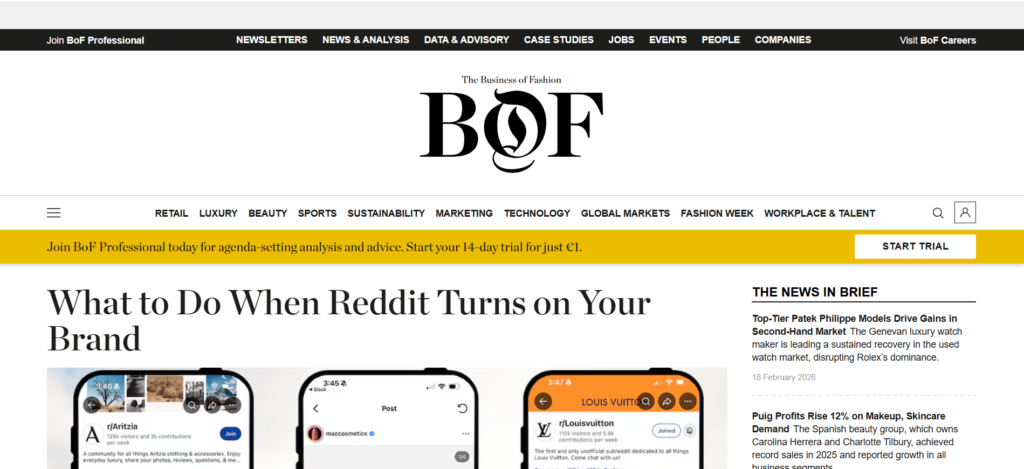
Business & Strategy Publications
Business of Fashion
What you learn:
- CEO interviews
- Luxury market analysis
- Brand strategy breakdowns
- Financial performance insights
Who needs it most:
- Fashion marketers
- Brand managers
- Buyers
- Merchandisers
- Executives
If you want to work in strategy or business roles, this is mandatory reading, but honestly I think even aspiring stylist and designers need this type of knowledge to do their job better.
WWD
What you learn:
- Retail results
- Executive moves
- Mergers & acquisitions
- Industry breaking news
Essential if you want U.S. market insights.
Drapers
Stronger focus on:
- UK retail
- Store performance
- Market case studies
Perfect for aspiring buyers and merchandisers.
Here the link to the official site
Vogue Business
More strategy-driven than editorial:
- Sustainability
- Tech in fashion
- Consumer behavior shifts
If you want to speak like a future executive, read this weekly.
If you want, here to know more about it!
Layer 2: Monthly & Quarterly Learning
Strategic Intelligence & Insider Platforms
This is where you stop consuming fashion like a fan… and start thinking like an executive.
These are not daily news platforms. These are deeper resources used by:
- Strategy teams
- Buying & merchandising departments
- Sustainability managers
- Supply chain directors
- CEOs
If you want to move beyond entry-level thinking, you need to read what decision-makers read.
Sustainability & Supply Chain Intelligence
Textile Exchange
Why this matters:
If you want to work in:
- Product development
- Sourcing
- Sustainability
- Luxury strategy
- Fashion design
You need to understand fibers, materials, traceability, and environmental impact.
Textile Exchange publishes:
- The Materials Market Report. Here the latest edition.
- Data on organic cotton, recycled polyester, regenerative agriculture
- Sustainability benchmarks used by global brands
If you mention Textile Exchange in an interview for a sustainability role, you immediately signal depth.
Sourcing Journal
This is where you learn:
- Manufacturing updates
- Supply chain shifts
- Tariffs and trade regulations
- Textile innovation
- Factory transparency
Who should read this?
- Buyers
- Merchandisers
- Product developers
- Sustainability managers
- Operations professionals
If Business of Fashion teaches you strategy, Sourcing Journal teaches you infrastructure.
Fashion doesn’t exist without factories. And insiders understand that.
Trend Forecasting & Data Intelligence
This is what fashion companies use internally.
You don’t need full subscriptions, most of these agencies have also their own blog and reports available on their websites for everyone to download
WGSN
What you learn:
- Macro trends 2+ years ahead
- Color forecasting
- Consumer behavior
- Retail analytics
Designers, product developers, and buyers rely heavily on forecasting logic.
Edited
What it does:
- Real-time retail data tracking
- Markdown monitoring
- Competitor assortment analysis
- Pricing intelligence
If you work in buying or merchandising, platforms like Edited are your weapon.
You won’t necessarily have personal access, but you should know what it is and how it’s used.
Future Snoops
Another forecasting platform similar to WGSN.
Focuses on:
- Consumer insights
- Youth culture
- Emerging aesthetics
Great for:
- Designers
- Product teams
- Youth-focused brands
Here the link to know more about it
Launchmetrics
This is huge in PR and marketing.
Launchmetrics measures:
- Media Impact Value (MIV)
- Influencer performance
- Fashion Week brand visibility
- Press coverage ROI
If you want to work in fashion PR or communications, knowing what MIV is instantly positions you as someone who understands modern luxury metrics. Launchmetrics is what you need.
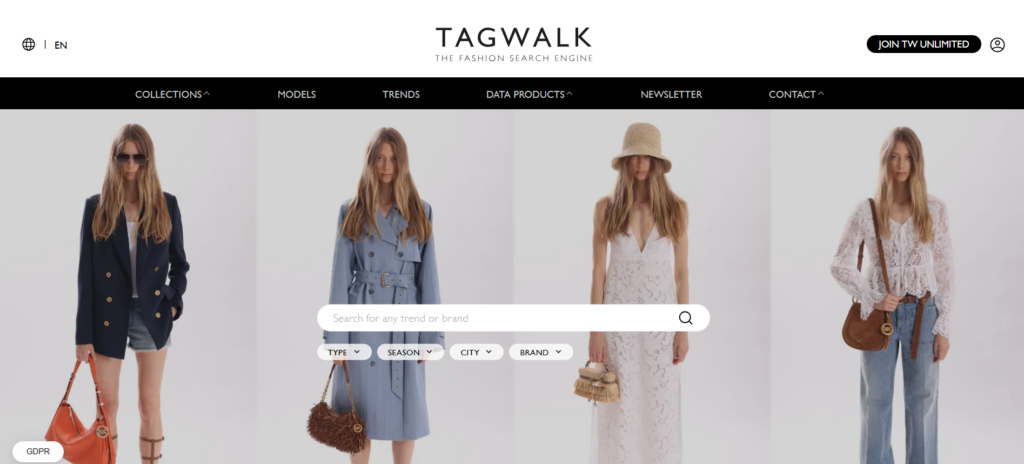
Tagwalk
This is an insider runway analysis platform.
Used by:
- Stylists
- Trend forecasters
- Buyers
- Editors
It allows you to:
- Search runway looks by keyword
- Track micro trends
- Analyze color and silhouette patterns
Market & Executive Reports
McKinsey & Company – State of Fashion Report
Annual must-read.
Covers:
- Profitability outlook
- Geographic growth
- Consumer behavior
- Risk forecasting
If you reference this in an interview, you instantly stand out. Here the link to the site.
Bain & Company – Luxury Study
Covers:
- Global luxury market size
- China & U.S. performance
- Ultra-high-net-worth trends
Executives read this. So should you. Here Bain & Company.
What I Would Recommend Based on Career
To make it extremely practical:
If You Want to Work in Sustainability:
- Textile Exchange
- Sourcing Journal
- McKinsey State of Fashion (sustainability sections)
If You Want to Work in Buying:
If You Want to Work in PR:
If You Want to Work in Styling:
If You Want to Work in Strategy:
Layer 3: Skills-Based Learning
What to Learn for Each Fashion Career
Now we move into the most important part.
Because knowing the industry is one thing.
Being hireable is another.
What to Learn for Fashion Marketing
Learn:
- 360° campaign strategy
- Influencer marketing
- Consumer psychology
- Media planning
- KPI tracking
- Excel
Excel is non-negotiable.
I explain why in depth in 3 reasons why you need to learn Microsoft Excel to work in Fashion.
Inside our Excel for Fashion course, I teach:
- Year-over-year growth
- Campaign performance analysis
Because when I interviewed at Alexander McQueen, I had to pass an Excel test .
That skill made the difference.
What to Learn for Fashion PR
Learn:
- Press release writing
- Influencer seeding
- Media lists
- Event coordination
- Sample trafficking
- Brand storytelling
And learn how to present these skills in applications.
Your cover letter is crucial. Read Fashion Cover Letter: How to Write One That Gets You Hired .
What to Learn to Become a Stylist
Learn:
- Moodboard creation
- Brand research
- PR communication
- Sample tracking and management
- On-set organization
Inside our Assistant Stylist simulation, students:
- Translate a theme into 3 looks
- Request samples
- Prepare shoot breakdowns
That’s real assistant work.
Use Vogue Runway weekly to analyze collections.
What to Learn for Editorial & Fashion Writing
Learn:
- Cultural analysis
- Theme building
- Magazine structure
- Layout logic
- Cover concept development
Inside our Editor-in-Chief for a Week simulation, students build a full mini magazine .
Study:
- Vogue
- Harper’s Bazaar
Do not just read casually but strategically.
What to Learn for Buying & Merchandising
Learn:
- Sell-through
- Open-to-buy
- Assortment planning
- Markdown strategy
- Trend forecasting
- Excel
Buyers live inside spreadsheets.
And no, you don’t need a fashion degree to do this.
What to Learn for E-commerce
Learn:
- Excel
- Conversion rate
- CRM
- Email marketing
- Product page optimization
- Analytics
Layer 4: Education-Based Learning
The Courses That Actually Prepare You for a Fashion Career
The platforms mentioned above make you informed.
But skills prepare you for a career in fashion.
And structured education gets you job-ready.
This is where online courses come in.
But not random courses.
Targeted, career-specific, employability-focused learning.
Let’s break down exactly what to learn depending on your gap.
1. Learn Excel for Fashion (Non-Negotiable Skill)
If you want to work in:
- Buying
- Merchandising
- E-commerce
- Marketing
- Retail
- Planning
- Brand management
Excel is mandatory.
Not optional. Not “nice to have.”
When I interviewed at Alexander McQueen, I was tested on Excel .
Most students think fashion is aesthetic.
Fashion is spreadsheets.
Inside Excel for Fashion, we don’t teach generic Excel.
We teach:
- Sell-through analysis
- Open-to-buy logic
- Style codes
- Year-over-year growth
- Campaign performance tracking
So when recruiters ask, “Are you comfortable with Excel?”
You don’t hesitate.
That’s how you stand out in 2026.
2. Learn Fashion History & Context
If you feel like:
“I love fashion but I don’t fully understand how the industry evolved.”
Then you need context.
Fashion history is not about memorizing dates.
It’s about understanding:
- Why certain aesthetics return
- How luxury houses built their legacy
- How fashion cycles work
- Why heritage matters
You cannot build the future without knowing the past. The best collections, campaigns, moves…always look back at the history.
Check the Inside Fashion a Fashion History Course here.
3. Learn Fashion Management Fundamentals
How the Fashion System Actually Works
Even if you don’t want to work directly in fashion management, you need to understand how a company operates.
You must understand:
- How collections are developed
- How pricing is structured
- What margins look like
- How production timelines work
- How wholesale differs from retail
- How PR and marketing align with product development
- How products move from sketch to store
This knowledge is especially crucial for:
- Marketing & PR
- Buying
- E-commerce
- Brand management
- Entrepreneurship
Because fashion is not just creativity.
It’s a system.
When you understand the system, you stop feeling lost.
You start thinking like someone inside the company.
Click here to the waitlist of my fashion management course.
4. Learn How to Land a Job in Fashion
Strategy > Degree
This is where most students struggle.
You can know everything about fashion.
But if you don’t know how to:
- Write a fashion CV
- Write a strategic cover letter
- Build a portfolio
- Cold email brands
- Network on LinkedIn
- Prepare for interviews
You won’t get hired.
That’s why the Break Into the Fashion Industry course exists.
Because the problem isn’t intelligence.
It’s strategy.
And this is exactly what closes the gap for students who say:
“I don’t have experience.”
“I don’t have connections.”
“I don’t have a fashion degree.”
You don’t need more theory.
You need positioning.
The Difference Between Students Who Break In and Those Who Don’t
The students who break into fashion:
- Consume industry news daily
- Read strategic reports monthly
- Understand supply chains
- Learn Excel
- Build portfolio projects
- Apply strategically
The ones who stay stuck:
- Scroll fashion TikTok
- Obsess over aesthetics
- Collect certificates
- Send generic resumes
Fashion is competitive.
But it’s not random.
When you combine:
Industry awareness
Strategic intelligence
Skills-based learning
Education-based execution
You become extremely hard to ignore.
The difference between someone who loves fashion and someone who works in fashion is this:
Professionals follow systems.
They understand:
- Margins
- Materials
- Regional growth
- Supply chains
- Media ROI
- Consumer behavior
If you start learning at this level, your language changes.
You stop saying:
“I love fashion.”
And you start saying:
“The APAC luxury slowdown is impacting ready-to-wear but leather goods remain resilient.”
That’s when recruiters start taking you seriously.
And that’s when you stop feeling like an outsider and start feeling like you belong inside the fashion office.
Now you know exactly what to learn, and where.
And that’s how you build a real fashion career.