

I broke into fashion 10 years ago with an internship at Alexander McQueen in the ecommerce department.
Some things have changed since then.
Back then, submitting your resume to enough companies could actually work. Some of my colleagues and friends landed their first roles in fashion simply by sending applications and waiting for a response.
Honestly, I never followed that path.
If you know my story, which later became the Glam Observer method that I’ve been teaching for years now, you know that I never believed one resume would be enough. I thought that since I wasn’t from a fashion background, didn’t have connections, and had zero industry experience, my resume wouldn’t really say much about me.
And in a way, I was right.
I didn’t land my first internship thanks to my resume.
That’s why the strategies I’ve been teaching for years still work today. Somehow, I anticipated the industry becoming more competitive than it actually was at the time. I assumed I needed to work harder than everyone else just to have a chance.
That intimidation you feel when you look at the fashion industry from the outside?
I felt it too.
So if I had to start again in 2026, here is exactly what I would do. If you want, I talked about this in one of my YouTube videos.
Step 1. I’d Study the Industry Like a Strategist, Not a Dreamer
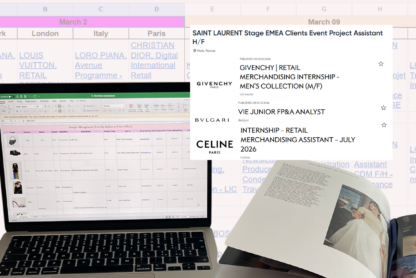
I’d start looking at the job boards online of LVMH,Kering,… and I’d start studying the job titles to understand what are the different career opportunities available now.
I’d look at:
- Which roles are being posted repeatedly
- Which departments are growing
- What skills are mentioned over and over again
- What tools they expect candidates to know
In 2026, hiring is more skills-based than ever. Recruiters are not just looking at your degree. They’re scanning for evidence that you can actually do the job.
So before saying “I want to work in fashion,” I’d say:
“I want to work in luxury digital marketing” or
“I want to work in merchandising” or
“I want to work in editorial.”
Specific always wins.
Step 2. I’d Pick One Direction and Go All In
You cannot apply for marketing, PR, styling, buying and editorial at the same time.
General applications don’t work anymore.
Recruiters in 2026 receive more applications than ever, and many companies use screening systems that look for very specific skill matches.
So I’d choose 1–2 departments maximum.
Then everything I build would align with that:
- My portfolio
- My resume
- My LinkedIn
- My cold emails
- Even my Instagram, if I use it professionally
Clarity is power.
Step 3. (This is the key one) I Would Practice the Job Before Having the Job
Today, everyone posts moodboards on Instagram.
Everyone says they’re passionate about fashion.
Everyone has a Pinterest board.
But passion is not a skill.
If I were starting today, I wouldn’t wait for an internship to learn the job.
I’d practice it.
If I wanted marketing, I’d create a launch plan for a brand I admire.
If I wanted styling, I’d build full look breakdowns with PR-style call-in sheets.
If I wanted editorial, I’d create a mini issue with a theme, masthead, and advertiser strategy.
This is exactly why I created the internship simulators. Because fashion recruiters today expect interns who can contribute from day one. They don’t want someone who just wants to “learn.” They want someone who already understands how the office works.
Hiring managers are looking for proof of value before you’re hired.
So don’t just say you’re passionate.
Show that you prepared.
Be that candidate. Study, practice, work on real projects. Be proactive, be knowledgeable.
Step 4. I’d Become Technically Strong (Excel Is Still Non-Negotiable)
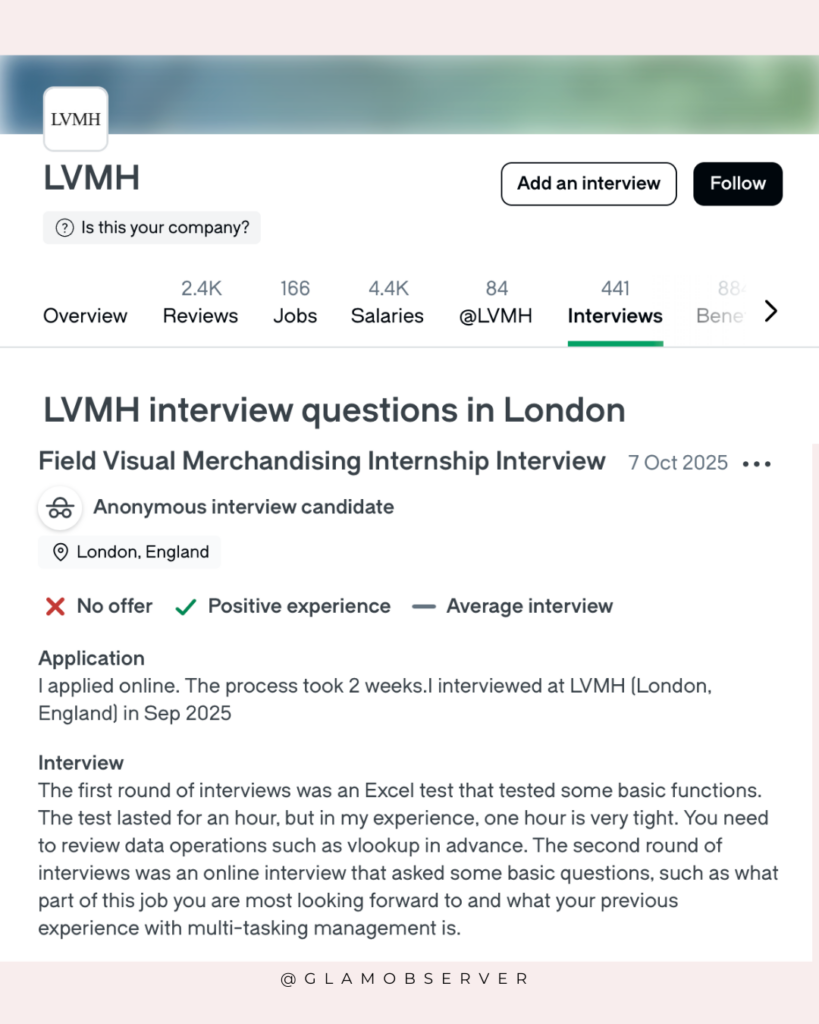
I did an excel test already back then during the job interview to land my first fashion internship and my students are still tested on excel in 2026. So especially if you want to get into fashion marketing, buying, merchandising, management… you need to learn it.
Creative people who understand data are rare.
Be that person.
That combination is powerful.
Step 5. I’d Build My Resume From the Job Description Backwards
I’d build the resume and cover letter starting from the job description, not from me, so I’d make sure it’s 100% tailored.
Many people make the mistake of starting their resume from themselves. And I get it, it’s the natural way to do it. But when you start from yourself, you build a resume that talks about you. When you start from the job description, you build a profile that reflects what the company is actually looking for.
And that’s the difference.
Because recruiters are not asking: Who are you?
They’re asking: Are you the person we need for this role right now?
If you don’t have experience, you think you have nothing to write and that your resume will be super short.
That’s not true.
You just need real responsibilities, even if they came from structured projects like the simulators.
Let me show you what I mean.
Example 1: If I Were Applying for a Fashion Marketing Internship
Instead of writing:
“Passionate about luxury fashion and marketing.”
I would write:
- Developed a 360° retail activation strategy for Saint Laurent Rive Droite, including event concept, target audience, media plan, and KPI projections.
- Conducted competitor analysis on Gucci and Prada campaigns to identify positioning gaps and opportunities.
- Created a PR launch strategy for Miu Miu x New Balance, including influencer seeding list, timeline, and press outreach structure.
- Defined campaign KPIs (reach, engagement, store traffic) and proposed performance tracking methods.
These are real marketing responsibilities.
Even if they come from a simulation, they reflect exactly what a marketing intern would do inside a luxury house.
Recruiters care about whether you understand the work and if you can prove you understand it BEFORE even a first real experience, you are impressing them twice!
(You can work on real marketing and PR internships here).
Example 2: If I Were Applying for a Styling Assistant Role
Instead of:
“Love styling and creating outfits.”
I would write:
- Translated a “Future Renaissance” moodboard into 3 complete editorial looks aligned with Vogue Italia standards.
- Researched luxury and emerging designers via Vogue Runway and brand lookbooks to align with editorial direction.
- Drafted professional PR sample request emails including shoot details, credit requirements, and return timelines.
- Created a sample tracking sheet to monitor garment logistics and ensure on-time returns.
These are assistant-level tasks.
They show organization, understanding of PR relationships, and real fashion office workflow.
(You can see the full styling workflow inside the Assistant Stylist simulator here ).
Example 3: If I Were Applying for Editorial / Fashion Writing
Instead of:
“Interested in fashion journalism.”
I would write:
- Conceptualized and produced a 12-page mini fashion magazine, defining theme, cultural angle, and editorial vision.
- Wrote an Editor-in-Chief letter explaining the issue’s positioning and relevance.
- Developed masthead structure and advertising strategy aligned with luxury publication standards.
- Styled and art-directed a cover concept reflecting current cultural trends.
That’s strategic editorial thinking.
And that is very different from just saying you like writing.
You can explore the full project structure inside the Editor-in-Chief simulator here
Step 6. I’d Apply Online, But I Would Not Stop There
Online applications are necessary.
But they are not enough.
If I had to start again today, I would apply through the company website and I would also reach out directly to people working in the department I’m targeting.
That means two things:
- sending LinkedIn messages
- sending actual emails when possible
Many people feel uncomfortable doing this, but the truth is that fashion has always worked through relationships and initiative.
When I say cold emailing, I don’t mean sending random messages like:
“Hi, I love your brand. Please see my resume.”
That doesn’t work.
Instead, I would:
- Identify people working in the team I want to join (for example: marketing manager, merchandising manager, editorial coordinator).
- Look at what they’re currently working on or campaigns they’ve been involved in.
- Send a short message or email referencing something specific about their work.
- Introduce myself and link a relevant project or portfolio piece.
For example, if I were applying for a marketing internship, I might say something like:
“I recently developed a retail activation concept for Saint Laurent Rive Droite as part of a marketing simulation project, and it made me realize how much I enjoy thinking about in-store experiences and brand storytelling. I would love to contribute to projects like this within your team.”
That kind of message does something very important.
It shows that you didn’t just apply randomly.
It shows that you already think like someone working in the department.
Cold emailing is not desperate.
It’s proactive.
And proactive candidates always stand out.
Step 7. I’d Use AI, But Not the Way Everyone Else Is Using It
Right now everyone is using AI to write their resumes and cover letters.
And I’ll be honest with you.
Lately, in conversations I’ve been having with recruiters, I keep hearing the same thing.
They are starting to see the exact same resumes and cover letters.
Same structure.
Same phrases.
Same tone.
Because everyone is prompting AI to write them.
So if I were applying today, I wouldn’t use AI to generate my resume or cover letter. I would still write those myself so they reflect my real thinking and personality.
Where AI becomes incredibly powerful is somewhere else.
I would use it to practice job interviews.
This is something I recommend to my students all the time, and it works incredibly well.
You can ask AI to:
- simulate a fashion recruiter interview
- ask behavioural questions
- challenge your answers
- ask follow-up questions like a real interviewer would
- simulate technical questions for marketing, merchandising, or editorial roles
It’s basically like having a private interview coach available anytime.
In fact, I even created a resource called Fashion Recruiters in Your Pocket, with 50+ prompts you can use with AI specifically to practice interviews for fashion roles.
Because the goal is not to sound robotic.
The goal is to become clear, confident, and prepared when a real recruiter asks you questions.
And practicing your answers out loud is one of the fastest ways to get there.
If there is one thing I want you to remember from this article, it’s this:
breaking into fashion is not about luck, and it’s not about sending hundreds of applications and hoping one works.
It’s about strategy and preparation.
When I landed my internship at Alexander McQueen, I didn’t have a long resume, a fashion degree, or connections in the industry. What made the difference was showing that I understood the job and that I was ready to contribute.
And this is exactly what fashion recruiters are still looking for today.
They want to see candidates who are prepared, proactive, and already thinking like someone working inside the industry, not someone who is just dreaming about it.
That’s precisely why I created the programs inside the Glam Observer Academy.
Inside Break Into the Fashion Industry, I teach you the full strategy I wish someone had taught me when I was starting: how to choose the right career path, build a strong fashion resume and cover letter, create a portfolio that proves your skills, and approach fashion companies with confidence.
If you want to strengthen your technical skills, especially for roles in marketing, buying, merchandising, or management, the Excel for Fashion course will teach you the exact Excel skills fashion companies expect candidates to know.
And if you want to practice real fashion jobs before getting hired, the Fashion Internship Simulators allow you to step into roles like marketing assistant, stylist assistant, or editor-in-chief and complete the same types of projects professionals work on inside luxury brands and magazines.
Because the truth is this.
The candidates who stand out today are not the ones who simply say they love fashion.
They are the ones who can show that they already understand how the industry works.
So start studying the industry.
Start practicing the job.
Start building proof of your skills.
Your first opportunity in fashion may be closer than you think.