
If you’re considering a career in fashion, and especially a creative editorial role working with magazines, writing, and dressing up people, there are two roles you’ve probably found yourself daydreaming about: the fashion editor and the fashion stylist.
They sound similar. People use the two words almost interchangeably. But they are not the same job, they don’t require the same skills, and they don’t lead to the same career. So in this article, I want to break down the difference between a fashion editor and a fashion stylist, so you can understand how each role actually works day to day, what it takes to get in, and which one is the best fit for you.
I’ve been on real sets, I’ve studied how the biggest names in the industry built their careers, and I’ve spent years helping people just like you break into fashion through my courses. So let’s get into it, the honest version, not the glossy one.
Fashion Editor vs Fashion Stylist: a first difference
Here’s the short version before we go deep: a fashion stylist is in charge of curating the looks, they decide what a person wears in a shoot, on a red carpet, in a campaign, or on stage. A fashion editor is in charge of the bigger editorial vision, they decide what story gets told, why it matters, and how the whole thing comes together as a piece of content, whether that’s a magazine spread, a brand campaign, or an online feature.
The confusing part? At the highest level, these two roles overlap. Some of the most iconic “editors” in fashion history were essentially master stylists. More on that in a second, because it’s one of the most misunderstood things about this industry.
What Does a Fashion Editor Do?
The role of the fashion editor is typically associated with fashion magazines. And when most people picture a fashion editor at a magazine, they immediately think “writer.” But here’s the truth that surprises a lot of people: the biggest fashion editors, like Grace Coddington, are far more stylists than writers. Their genius isn’t in writing the story, it’s in curating the editorial, building the visual world, deciding the concept, the mood, the casting, the location, the styling that makes an image unforgettable.
At the biggest fashion magazines, there is actually a whole ecosystem of roles. There are fashion editors, and separately there are writers, staff writers, and online writers who produce the words for print, for online articles, and for social media. The editorial writing and the fashion direction are often two different jobs held by two different kinds of people.
Fashion editors don’t only work at magazines, either. They also work at brands, Burberry, Dior, and so on, where they might oversee the editorial content of the brand: the online copy, the social media, the email newsletters, the campaign storytelling. And they work at online retailers like Net-a-Porter, which run their own magazines and blogs and need editors to shape that content.
If you want to go deeper on this specific path, I’ve written a full guide on how to become a fashion editor, and another on what to study to become a fashion editor, which pair perfectly with this article.
What Does a Fashion Stylist Do?
Stylists are in charge of curating the looks. That’s the heart of it. But “stylist” is an umbrella term, and there are several very different types of stylists depending on who they dress and why:
- Editorial stylists create the looks you see in magazine shoots and fashion stories, this is where fashion gets to be art.
- Commercial stylists style for brands, catalogs, e-commerce, and advertising campaigns, more product-focused, more sell-focused.
- Celebrity stylists dress public figures for red carpets, press tours, performances, and everyday life.
- Personal stylists work one-on-one with private clients to build their wardrobe and personal image.
Each of them curates looks, but for different occasions, different people, and different goals.
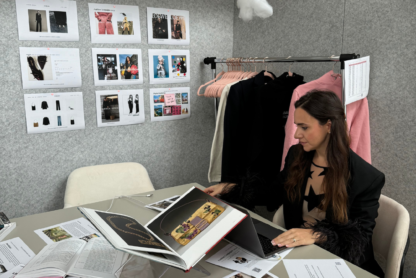
A Typical Day for a Fashion Editor
No two days look exactly the same, that’s part of the magic, but here’s what a fashion editor’s day can realistically involve:
- Deciding what goes into the next Vogue editorial, what the story will be and what it’s trying to say.
- Curating mood boards and doing deep research, references, art, past collections, cultural moments.
- Meeting with designers to see the new collection before anyone else does.
- Interviewing a designer, or studying the collection, to build the narrative around the images, because remember, it’s not just about curating looks, it’s about building the story.
- That last point is the whole difference. An editor is a storyteller first. If you want to see how this comes to life at the highest level, I broke it all down in Behind the Scenes of Magazines: The Making of a Vogue Cover.
A Typical Day for a Fashion Stylist
A stylist’s day is much more hands-on and physical, and it’s built around one thing: the look coming together perfectly, on time, on set.
- Pulling garments, accessories, and shoes from showrooms, PR agencies, and brands (this is called “the pull”).
- Building the racks: organizing every look for every shot, steaming, pinning, tagging, and prepping so nothing is a surprise on the day.
- Running the fitting: styling the model or client, adjusting proportions, testing combinations, making a jacket sit exactly right with a single pin.
- Being on set for the shoot itself, working shoulder to shoulder with the photographer, art director, hair and makeup, tweaking every look in real time.
- Returning everything after the shoot (the “return” is a real, and huge, part of the job that nobody warns you about).
If you want to understand this from the inside, I wrote a full guide on how to become a stylist and work on a photoshoot.
How to Become a Fashion Editor
If your dream is to work at a fashion magazine, the entry point is almost always the same: fashion assistant jobs at Vogue and other magazines.
As a fashion assistant, you’ll start in the magazine cupboard, aka the fashion closet, organizing clothes, beauty products, and accessories, managing the inventory, coordinating couriers and returns, and helping editors with research and prep. It’s demanding, it’s detail-obsessed, and it is the training ground for future editors. For context on what this job actually involves, read the role of the fashion editor assistant, explained from who works at Vogue.
And in case you think entry level means invisible or unpaid: for a recent fashion assistant position at Vogue, the expected salary was around $61,000–$70,000 per year, depending on education, experience, and skills. Not bad for a role people assume is “just” organizing a closet.
One more thing that matters enormously here: knowing how to actually reach the people who hire. I put together a guide on how to find and connect with fashion editors, because your ability to get in front of the right person is often what separates the people who break in from the people who keep waiting.
How to Become a Fashion Stylist
Becoming a fashion stylist usually starts one of two ways, and the smartest people do both.
Start with styling internships
Look for styling internships at brands and online retailers, e-commerce styling internships at a company like Net-a-Porter, or a styling internship at Burberry, for example. These give you structure, mentorship, and a real portfolio.
If you’ve never landed an internship before and you feel like you don’t have “enough” to show yet, this is exactly the gap my Fashion Internships Simulator was built to close. It lets you build real projects and develop the practical skills employers actually look for, so you walk into applications with proof of what you can do instead of just hoping someone gives you a chance.
Assist other stylists
If you dream of becoming a freelance stylist, a celebrity stylist, or an editorial stylist, one of the best moves you can make is to assist other stylists on set. Even helping out on just one or two shoots is a powerful start, because this industry runs on contacts.
And I mean that literally. When you assist on set, you don’t only meet the stylist, you get to know the photographers, the other editors, the art directors, the fellow assistants. Any one of them can be the reason you get called for the next shoot. Connections are not a “nice to have” in fashion, they are the job.
The set moment that taught me everything
I’ll never forget this. I was on set once for a fashion campaign about female entrepreneurs in fashion for Silvian Heach, and I watched the stylist working side by side with her assistant while everyone on that set was talking to each other, the photographer, the art director, the whole team, all connected, all in constant conversation.
That was the moment it clicked for me. This is where the real power of connections lives in the fashion industry. Not in an inbox. Not in a cold application. On set, in the room, in the relationships. It’s the single biggest reason I tell everyone in my courses that getting in the room matters more than having the perfect résumé, and it’s a core reason I built How to Break Into the Fashion Industry the way I did, around access, contacts, and the moves that actually get you hired.
Skills You Need to Be a Fashion Editor
Editors live at the intersection of taste and vision. The skills that matter most:
- Editorial storytelling, the ability to turn a collection or a trend into a narrative people feel.
- A strong, defined point of view, editors are hired for their taste and their eye, not for being neutral.
- Cultural and fashion literacy, knowing designers, references, art, and history deeply enough to build meaning into an image.
- Writing and communication, even when editors aren’t the primary writers, they shape and direct the words.
- Research and organization, the mood boards, the references, the planning that hold a story together.
- Relationship-building with designers, PRs, photographers, and stylists.
Skills You Need to Be a Fashion Stylist
Stylists live at the intersection of taste and execution. The skills that matter most:
- A sharp eye for proportion, color, fit, and combination, the actual craft of making a look sing.
- Encyclopedic product knowledge, knowing brands, collections, and where to source every piece.
- Speed and calm under pressure, sets move fast, and the stylist keeps every look on track.
- Logistics and organization, pulls, returns, budgets, and racks are a serious operation.
- On-set collaboration, working seamlessly with photographers, art directors, hair, and makeup.
- Samples management, requesting, tracking, organizing, and returning every garment and accessory from showrooms and PR agencies without losing a single piece.
- Writing and communication for PR pulls, knowing where to request clothes and how to handle the back-and-forth with PRs professionally, a core skill I teach step by step inside the Fashion Internships Simulator.
- Networking and self-promotion, especially for freelancers, your next job comes from your last set.
Notice the overlap? Both roles are built on taste, culture, relationships, and relentless organization. The difference is where they point that skill set: the editor toward the story, the stylist toward the look.
What to Study to Become a Fashion Editor vs a Fashion Stylist
Good news: there’s no single “correct” degree for either path.
You can study fashion styling, journalism, or communications. You can go the traditional fashion degree route. Or you can pivot from a completely different background, marketing, communication, business, or something unrelated entirely. I’ve seen people break into both roles from every possible starting point, and I dig into the education question specifically in what to study to become a fashion editor.
What matters far more than your exact degree is your portfolio, your contacts, and your ability to prove you can do the work. That’s true whether you want to be an editor or a stylist, and it’s the whole reason I always tell people to focus less on credentials and more on building tangible proof.
If you’re still deciding where to even begin, start with how to start your career in fashion from scratch.
Fashion Editor vs Fashion Stylist: Which One Is Right for You?
So, which one are you?
If you’re drawn to the why, the concept, the narrative, the cultural meaning behind the images, and you love building a whole world around a shoot, you’re leaning editor. If you’re drawn to the what and the how, the pieces, the proportions, the physical craft of making a look come alive, you’re leaning stylist.
And here’s the thing I want you to remember: you don’t have to have it perfectly figured out today. Both paths start in strikingly similar places, an assistant role, a set, a first internship, a first real contact. The most important thing, the thing that matters more than anything else, is simply getting in. I wrote a whole piece on exactly this: the #1 thing that matters the most to get a job in fashion as a stylist, editor, and designer.
Ready to Break Into Fashion, as an Editor or a Stylist?
Whichever role is calling you, the path in is the same: build real skills, build real proof, and build real relationships. That’s exactly what I help you do.
- Start with everything inside my fashion courses.
- If you’re serious about getting hired, How to Break Into the Fashion Industry walks you through the exact moves, contacts, and strategy that actually get you in the room.
- Want a real portfolio and hands-on experience before you even apply? Build it with the Fashion Internships Simulator.
And if you want me to walk you through all of this personally, first, join my free webinar. It’s the best place to start, and it’s completely free.
Your dream role, editor or stylist, is closer than you think. Let’s get you in the room.