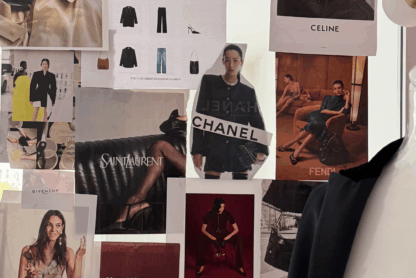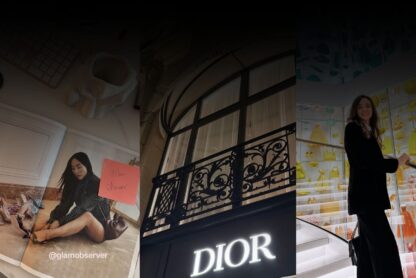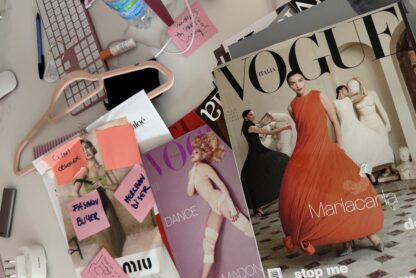



If you want to get a job in fashion, you are probably already familiar with some of the most iconic names in the industry — Dior, Chanel, Prada, Vogue. These are the companies most people think of first when they imagine a fashion career.
But the fashion industry is a full ecosystem. It is made up of dozens of different types of companies, hundreds of brands, and thousands of career opportunities that most people never even consider.
One of the biggest mistakes I see when working with students who want to break into fashion is narrowing the job search to a handful of dream brands and missing an enormous range of opportunities that could get them into the industry faster — and sometimes even give them a better experience to reach those dream brands later.
After working at Alexander McQueen, YOOX Net-a-Porter, and Kering, and after spending ten years mentoring students into fashion careers at Glam Observer, I have seen clearly that the people who break into fashion fastest are the ones who understand the full picture of the industry — not just the famous names on the surface.
This guide covers every type of fashion company you can work for, what careers each one offers, and how to think about which is right for you.
Why Understanding Fashion Companies Is the First Step to Getting Hired
Most people approach the fashion job search randomly. They find an offer they like online, put together a CV and cover letter as quickly as possible, and send it off. Then they do the same thing again for the next opening they find.
That approach does not work — especially if you want to work at the top companies in the industry.
Your application needs to be strategic. And a strategic application starts with understanding exactly what kind of company you are targeting and why. Not just “I want to work in fashion” but “I want to work in luxury marketing” or “I want to work in e-commerce at an online fashion retailer” or “I want to work in PR at a fashion agency.”
The more specific you are, the more focused your CV, cover letter, and portfolio become — and the more seriously a recruiter takes your application.
So before you apply anywhere, use this guide to understand what is actually out there. You might discover that your dream career exists somewhere you had never considered.
Luxury Fashion Brands
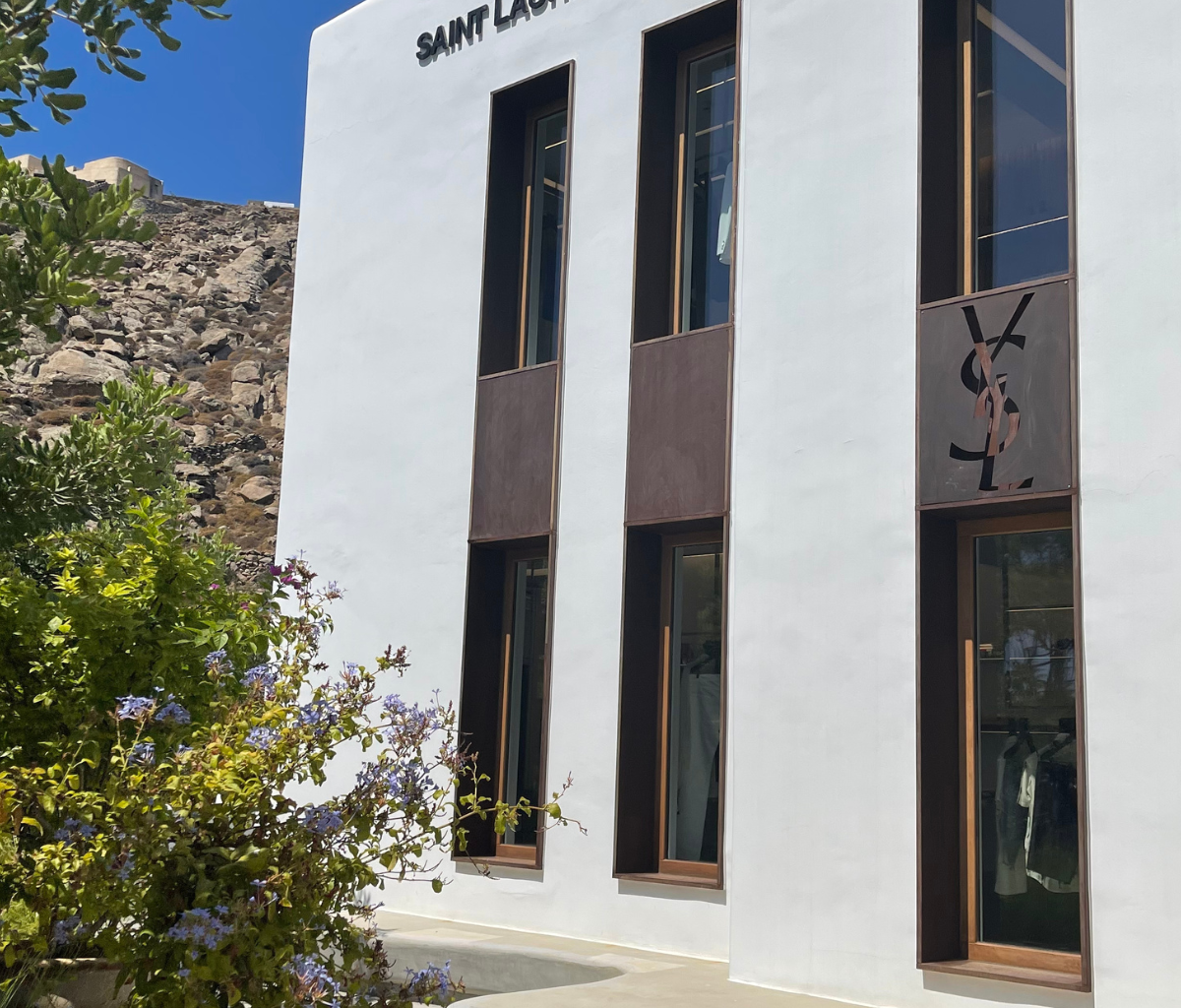
Luxury fashion brands are the most aspirational companies in the industry — Dior, Chanel, Gucci, Prada, Louis Vuitton, Saint Laurent, Balenciaga, Bottega Veneta. These are the brands most people think of first when they imagine working in fashion.
But it is important to understand something about luxury brands before you target them: they are not just fashion companies. They sell identity, culture, and lifestyle. The product is almost secondary to the experience and the image around it. If you want to work at one of these companies, you need to understand the business of luxury — how it operates, how it communicates, and why it is fundamentally different from any other part of the fashion industry.
What careers luxury fashion brands offer
Luxury brands hire across every department you can imagine: marketing, PR and communications, buying and merchandising, design, product development, retail and client experience, e-commerce, digital marketing, supply chain, HR, legal, and finance. The misconception is that luxury brands only hire designers and creative professionals. In reality, the majority of roles are business-facing.
When I analysed 1,117 fashion internships and entry-level jobs listings between January and March 2026 for the Break Into the Fashion Industry course, the highest demand roles across luxury brands were in merchandising, planning, marketing, digital commerce, and retail operations — not design.
What to know before applying to luxury fashion brands
Luxury brands are international environments. Most of the major French and Italian houses have their headquarters in Paris or Milan but also have offices around the world. They hire internationally — not just locals — which means geography is less of a barrier than people assume.
Competition is high. These brands receive hundreds or thousands of applications for a single internship. The candidates who get through are not necessarily the most qualified — they are the ones whose applications feel the most intentional and specific to that brand. A generic application sent to Dior is never going to work. A specific one that shows genuine knowledge of the brand and what the role involves just might.
Luxury and Fashion Conglomerates
Many of the world’s top luxury brands are not independent companies — they are part of large conglomerates that own multiple brands across fashion, accessories, beauty, watches, and beyond. Understanding how these groups are structured is essential if you are serious about building a career in the industry, because it opens up far more opportunities than targeting individual brands alone.
LVMH — Moët Hennessy Louis Vuitton is the world’s largest luxury conglomerate, owning over 75 brands across fashion, leather goods, wines and spirits, perfumes and cosmetics, watches and jewellery, and selective retail. In fashion specifically, LVMH owns Louis Vuitton, Christian Dior, Fendi, Céline, Loewe, Givenchy, Kenzo, Loro Piana, Marc Jacobs, and Off-White among others. It also owns Sephora, Tiffany & Co., Bulgari, TAG Heuer, and Moët & Chandon. LVMH is headquartered in Paris and employs over 200,000 people globally.
Kering is the second major French luxury conglomerate, focused primarily on fashion and leather goods. It owns Gucci, Saint Laurent, Bottega Veneta, Balenciaga, Alexander McQueen, Brioni, Pomellato, and Qeelin. Kering is also notable for its sustainability commitments and its internal divisions — including Kering Eyewear, which manages eyewear for all Kering brands and operates as its own hiring entity.
Richemont is a Swiss conglomerate with a focus on jewellery, watches, and accessories. Its fashion-adjacent brands include Cartier, Van Cleef & Arpels, Chloé, Alaïa, Dunhill, and Montblanc. For those interested in luxury but drawn to accessories, jewellery, or watches rather than fashion directly, Richemont is an important group to know.
Prada Group operates differently from the mega-groups — it is publicly listed but family-controlled, and owns Prada, Miu Miu, Church’s, and Car Shoe. It is one of the few major luxury groups that remains relatively independent from the LVMH-Kering duopoly.
OTB Group is an Italian conglomerate that owns Diesel, Maison Margiela, Marni, Viktor & Rolf, and Amiri among others. Less discussed than LVMH or Kering, but an important employer especially in Italy and for those interested in more avant-garde or contemporary luxury.
Tapestry is an American group that owns Coach, Kate Spade, and Stuart Weitzman. It operates at a different price point from European luxury but is a significant employer in the American fashion market.
PVH Corp owns Calvin Klein and Tommy Hilfiger and operates globally across retail, wholesale, and licensing.
Inditex is the Spanish group behind Zara, Massimo Dutti, Bershka, Pull&Bear, Stradivarius, and Oysho — the world’s largest fashion retailer by revenue and one of the most significant employers in fashion.
H&M Group owns H&M, COS, & Other Stories, Arket, Weekday, and Monki. Like Inditex, it operates at massive scale and hires across all departments globally.
Why this matters for your career: you can work for a conglomerate at two levels. You can work for an individual brand within the group — for example, getting a marketing role at Bottega Veneta within Kering. Or you can work for the group itself at a corporate level — LVMH, Kering, and Richemont all post positions in finance, digital innovation, communications, HR, and strategy at the group level. These corporate roles are often overlooked and can be excellent entry points, especially for candidates with a business, management, or engineering background who want to enter the fashion world through a less traditional route. Once you are inside a group, moving between brands is common and actively encouraged by most of the major conglomerates.
Fast Fashion Companies
Fast fashion companies — Inditex (Zara, Massimo Dutti, Bershka), H&M Group (H&M, COS, & Other Stories), Mango, Primark — operate on a completely different model from luxury. Speed, volume, and data drive everything. Collections move at a pace that luxury houses could not imagine, and decisions are made based on consumer data rather than creative vision alone.
What careers fast fashion companies offer
Buyers, merchandisers, marketers, PR, supply chain, trend researchers, e-commerce managers, data analysts. The full range of fashion careers exists here, and these companies hire at scale — meaning more opportunities and often more accessible entry points.
What to know before applying to fast fashion companies
Working at a fast fashion company teaches you things that luxury houses simply cannot — how to make fast decisions under commercial pressure, how to read and respond to consumer data, how to manage enormous product volumes. If you are interested in buying, merchandising, or supply chain as a long-term career, spending time at a fast fashion company early can build skills that are highly transferable into luxury later.
Department Stores and Retailers
Department stores are environments where you work with multiple brands simultaneously under one roof. The most iconic ones include Harrods and Selfridges in London, Galeries Lafayette and Printemps in Paris, La Rinascente in Milan, Saks Fifth Avenue and Bergdorf Goodman in New York, and Harvey Nichols across the UK and Middle East.
What careers department stores they offer
Buying and merchandising (often for multiple brands across a category), retail operations, visual merchandising, marketing, PR, events, personal shopping, and client experience. Department stores are particularly good entry points for buying careers — you get exposure to a wide range of brands and products that you would never see working for a single label.
Online Retailers and E-commerce Platforms
Online fashion retail has grown into one of the most significant parts of the industry. Net-a-Porter, Mytheresa, Farfetch, Zalando and ASOS are among the most established. These companies sit at the intersection of fashion and technology — which makes them unique and increasingly important career destinations.
What careers Online Retailers and E-commerce Platforms offer
E-commerce buyer, e-commerce merchandiser, e-commerce stylist, digital marketing, CRM and customer relationship management, data analysis, content production, UX and product management. This part of the industry is still growing, which means opportunities are expanding. If you want to work in fashion but you also have an interest in technology, data, or digital strategy, online retailers are worth looking at seriously.
What to know before applying
Working at an online retailer gave me a perspective on the industry that I could not have got anywhere else. You see how fashion actually sells — what customers respond to, how pricing works, how content drives conversion. It is a different kind of fashion education, and one that is genuinely valued across the rest of the industry.
PR and Communications Agencies
Most fashion brands have internal PR teams, but they also work with external agencies for specific campaigns, events, and launches. PR agencies manage public relations for multiple brands simultaneously — organising events, coordinating press coverage, managing influencer relationships, and protecting brand reputation. Some of the most well-known fashion PR agencies include Karla Otto, KCD Worldwide, Purple PR, and Negri Firman.
What careers PR agenices offer
PR assistant, account manager, event coordinator, press officer, influencer relations manager. The advantage of working at a PR agency rather than in-house at a brand is breadth — you work across multiple clients and campaigns simultaneously, which accelerates learning significantly. Many people who want to work in fashion PR start their careers at agencies before moving in-house.
Creative Management Agencies
This is a part of the industry that most people starting out have never heard of — but it is a genuinely exciting career option. Creative management agencies represent fashion and beauty professionals — stylists, photographers, makeup artists, hair stylists, nail artists, creative directors. When a brand needs a stylist for a campaign or a photographer for an editorial, they go through these agencies to find and book the right talent. The Wall Group is one of the most well known.
What careers they offer
If you want to work inside one of these agencies, you could work as an agent or assistant agent — managing the bookings, relationships, and careers of the talent on your roster. Or, if you are pursuing a creative career yourself — as a stylist, photographer, or makeup artist — you could eventually be represented by one of these agencies as a talent.
Trend Forecasting Agencies
Trend forecasting agencies analyse cultural signals, consumer behaviour, and aesthetic shifts to predict where fashion is going — often 18 to 24 months in advance. WGSN is the most well-known globally. Others include Trendalytics, Fashion Snoops, and Trendstop.
What careers they offer
Trend analyst, research analyst, content strategist, product manager, client services. If you are fascinated by the idea of understanding why trends emerge and where culture is moving, trend forecasting agencies are worth exploring seriously. They work with clients across luxury brands, high street retailers, sportswear companies, and beyond.
Fashion Data and Analytics Platforms
This is one of the most overlooked sectors in fashion — and one of the fastest growing. Companies like Launchmetrics and Tagwalk specifically analyse the fashion industry. Launchmetrics measures brand performance, tracks media impact, analyses campaigns, and quantifies the value of influencer and press coverage for fashion brands. Tagwalk operates as a fashion search engine that tracks runway looks and analyses show data.
What careers they offer
Data analyst, marketing analyst, product manager, client success manager, content manager. If you love the intersection of fashion, data, and technology, these companies offer something genuinely different from traditional fashion careers. And because they work with brands across the entire industry, you develop a broad understanding of how fashion operates commercially that is hard to get anywhere else.
What to know before applying
These companies are not yet on most people’s radar when they think about fashion careers — which means competition for their roles is often lower than at the big luxury brands. If you have an analytical mindset and a genuine interest in fashion, they are absolutely worth adding to your target list.
Fashion Production Companies
What they are
Behind every major fashion show, brand event, pop-up, and global launch, there is a production company making it happen. Bureau Betak is the most famous in the industry — they have produced shows and events for brands including Dior, Louis Vuitton, and Alexander McQueen. These companies handle everything from venue sourcing and set design to logistics, staffing, and technical production.
What careers they offer
Production assistant, event coordinator, project manager, creative producer, logistics manager. If you love fashion events and want to be involved in the behind-the-scenes execution of the industry’s most spectacular moments, fashion production companies are a career path worth knowing about.
Fashion Magazines and Media Groups
Just as luxury brands are part of conglomerates, fashion media is dominated by large groups. Condé Nast owns Vogue, GQ, Vanity Fair, Vogue Business, Glamour, and many other titles globally. Hearst Magazines owns Harper’s Bazaar, Elle, Cosmopolitan, and others. These groups publish both in print and digital, and they operate significant marketing, advertising, and events businesses alongside their editorial output.
What careers they offer
Editorial assistant, fashion editor, digital editor, social media manager, marketing coordinator, brand partnerships manager, events producer, audience development manager, advertising sales. One of the most important things to understand about media companies is that the majority of available roles are not editorial. Most entry-level positions at places like Condé Nast are in marketing, digital, and commercial — not writing or editing. Editorial teams are smaller than people imagine, and many writers and editors work as freelancers rather than staff.
In my 2026 analysis of 1,117 fashion job listings, Condé Nast appeared consistently every single week — making it one of the most reliable hiring companies in the industry. But the roles were overwhelmingly in audience development, digital production, and marketing partnerships — not editorial.
What to know before applying
If your dream is to work at Vogue, do not limit your application to editorial roles. The marketing, digital, and commercial teams are larger, hire more frequently, and can be an excellent entry point into the wider world of fashion media.
Licensing and Product Development Companies
This is another part of the industry that most people have never considered — and it is genuinely fascinating. Many luxury brands do not produce certain product categories themselves. Instead, they licence the rights to specialised companies who develop and manufacture those products on their behalf.
The most well-known example is eyewear. Luxottica produces the eyewear for brands including Chanel, Prada, Burberry, Versace, and Jimmy Choo. Safilo Group produces eyewear for Victoria Beckham, Boss, and Isabel Marant. And Kering Eyewear — the eyewear division of the Kering group — produces glasses for Saint Laurent, Gucci, Balenciaga, Bottega Veneta, and all other Kering brands.
The same model applies to beauty and fragrance. Coty, for example, produces fragrances and beauty products for brands including Kylie Jenner, Marc Jacobs, Chloé, and Burberry. Interparfums does the same for brands like Montblanc and Karl Lagerfeld.
What careers they offer
Product manager, licensing manager, brand manager, marketing coordinator, retail coordinator, sales manager. These companies post their own job listings separately from the brands they produce for — so if you want to work in the world of Gucci or Chanel but cannot find an opening at the brand itself, Kering Eyewear or Luxottica might be your way in.
What to know before applying
Kering Eyewear in particular is worth watching if you want to break into the Kering ecosystem. They post positions regularly and the work gives you direct exposure to Kering brand culture and standards.
Secondhand and Resale Platforms
What they are
The secondhand fashion market is one of the fastest growing sectors in the entire industry. Vestiaire Collective, The RealReal, Vinted, and newer platforms like Fiya are building significant businesses around the circular fashion economy. These are modern, fast-moving companies with strong tech components — different in culture and structure from traditional fashion houses, but deeply embedded in the fashion world.
What careers they offer
Authenticator, e-commerce manager, marketing manager, sustainability specialist, pricing analyst, curation manager, brand partnerships manager, UX designer. If you care about sustainability but also want to work in a dynamic, growing company rather than a traditional fashion house, these platforms offer something genuinely different.
How to Choose the Right Type of Fashion Company for You
Now that you know what is out there, the next step is narrowing your focus.
Here is how to think about it. Ask yourself three questions:
What kind of work do you actually want to do every day? The role matters as much as the company name on your CV, and the same job title can mean completely different things depending on where you work. A data analyst at Launchmetrics spends their days measuring the media impact of fashion shows, tracking how much press coverage a Dior campaign generated compared to a Chanel one, quantifying the value of an influencer’s post for a brand launch, and presenting those insights to clients across the industry. A data analyst at Louis Vuitton is working inside one brand — analysing sales performance by product category, tracking inventory across retail markets, supporting buying decisions with commercial data. Both are data roles in fashion. But one gives you a bird’s eye view of the entire industry, and the other gives you deep expertise in how one of the world’s most iconic brands operates commercially. Neither is better — but they are genuinely different, and knowing which one excites you more will tell you a lot about which direction to go.
What kind of environment do you want to work in? A large luxury conglomerate like LVMH or Kering is a structured, hierarchical environment with clear career paths, formal processes, and a lot of internal protocol. Your role will be well-defined, your responsibilities will be specific, and there is a whole system around you supporting what you do. That structure can be incredibly valuable — especially early in your career when you want to learn from experienced teams and understand how a global luxury business actually operates. A boutique PR agency like Karla Otto or Purple PR, on the other hand, is a fast-moving environment where you might be coordinating a press seeding for one brand in the morning, organising a fashion week event for another in the afternoon, and writing a strategy proposal for a third before the end of the day. The pace is relentless, the exposure is broad, and you develop skills quickly because the team is small and everyone carries real responsibility. A fashion production company like Bureau Betak operates almost entirely around major moments — fashion shows, global launches, pop-ups — which means the work is intense and project-based, with quieter periods in between. A platform like Vestiaire Collective or Vinted has a tech company culture inside a fashion context — data-driven, fast-iterating, with a startup energy that feels very different from the formality of a traditional maison. None of these environments is better than the others. But they will suit very different kinds of people, and understanding which one resonates with you before you apply will make your applications significantly more convincing.
What do you want to learn? Early in your career, this is honestly the most important question — and the answer is not always the most prestigious company on the list. If you want to learn how luxury brand strategy actually works at the highest level, spending time inside an LVMH or Kering brand will give you that foundation. If you want to understand how fashion communicates with the press and manages its public image, a PR agency gives you far more exposure in two years than an in-house role at a single brand ever could — because you are working across multiple clients simultaneously. If you want to understand the commercial mechanics of fashion — how products sell, how consumers behave, how data drives decisions — an online retailer like YOOX Net-a-Porter or Zalando will teach you things that a traditional fashion house simply cannot, because their entire business is built around that kind of thinking. When I worked at YOOX Net-a-Porter and Alexander McQueen, I learned different things. The McQueen team taught me how a luxury brand creates and communicates its identity. The YOOX Net-a-Porter team taught me how fashion actually sells — what drives a customer to click, what makes a product convert, how content and commerce connect. Both were invaluable. They just taught me completely different things.
Once you have answered those three questions, you will have a much clearer picture of which types of companies to target — and your applications will be significantly stronger for it.
Ready to Break Into Fashion?
If this guide helped you see the full picture of the fashion industry, here is where to go next.
If you want to understand the full strategy — how to choose your target role and company, build your application, and approach fashion companies in a way that actually gets responses — join my free masterclass: 3 Powerful Strategies to Break Into the Fashion Industry. It is the same method I used to break into fashion without experience, connections, or a fashion degree.
If you are ready to go deeper — with step-by-step guidance on your CV, cover letter, portfolio, and interview preparation — the Break Into the Fashion Industry course covers everything in full.
If you want to build real portfolio projects before your first internship — the Fashion Internship Simulator puts you inside four real fashion industry role simulations so you have actual work to show recruiters, even if you have never worked in fashion before.
Frequently Asked Questions
What are the best fashion companies to work for?
The best fashion company for you depends on your career goals, not on prestige alone. Luxury brands like Dior, Chanel, and Louis Vuitton are among the most competitive and aspirational destinations. Fashion groups like LVMH and Kering offer broad corporate career paths. Online retailers like YOOX Net-a-Porter and Mytheresa offer strong opportunities at the intersection of fashion and technology. Agencies, media companies, and specialist platforms like Launchmetrics and Bureau Betak offer paths that most people never consider. The best company is the one where you can do the work you want to do and learn what you need to learn next.
What types of companies can you work for in fashion?
The fashion industry includes luxury brands, fashion groups like LVMH and Kering, premium and contemporary brands, fast fashion companies, department stores, online retailers, PR agencies, creative management agencies, trend forecasting agencies, fashion data platforms, fashion production companies, fashion magazines and media groups, licensing and product development companies, and secondhand resale platforms.
Which fashion companies hire the most interns?
Based on an analysis of 1,117 fashion internship and entry-level job listings between January and March 2026, the companies that appeared consistently every week included Christian Dior, Louis Vuitton, Condé Nast, Céline, Chanel, and Giorgio Armani. Paris-based companies dominated the dataset, followed by Milan and New York.
Do you have to live in Paris or Milan to work in fashion?
Not necessarily. While Paris and Milan have the highest concentration of luxury fashion jobs, major fashion companies also have offices in London, New York, Dubai, Shanghai, and many other cities. Many luxury brands also have international teams and hire people from different countries. That said, Paris and Milan offer the most entry-level opportunities, so relocating — even temporarily — can significantly expand your options.
What is the best fashion company to work for if you are just starting out?
If you are just starting out, the best company is the one that will give you the most relevant experience for the career path you want to pursue. Premium brands, agencies, online retailers, and fashion data platforms often offer more accessible entry points and broader hands-on experience than the most competitive luxury houses. Starting somewhere slightly less obvious and building strong skills is often faster than waiting for the perfect luxury internship.
What is LVMH and why does it matter for fashion careers?
LVMH is the world’s largest luxury goods group, owning brands including Louis Vuitton, Christian Dior, Fendi, Céline, Loewe, Givenchy, and many others. It matters for fashion careers because it is both one of the largest employers in luxury fashion and an organisation that actively promotes careers across its brands. Working at any LVMH brand can open doors across the entire group.