

You scroll through Vogue editorials, red carpet photos, or even your favorite brand’s Instagram, and you think: “I’d love to be the person creating these looks.” Becoming a fashion stylist is one of the most exciting careers in the industry, equal parts creativity, challenge, and collaboration.
But how much do you know about what this role means in real life – not from the glamorous side of it often portrayed in movies and editorials – but the real practical responsibilities that happen behind the scenes, and how to get your foot in the door?
In this article, you will learn about:
- What a fashion stylist does and the responsibilities
- Editorial, Celebrity, Personal Styling: what changes and how to choose what’s right for you
- What to study to become a stylist
- The skills required to become a stylist
- Where to find styling jobs and internships
- A styling portfolio project idea you can do at home even if you have no experience that will instantly make you look more qualified in the eyes of recruiters
The good news? You don’t need a fashion degree or years of experience to start. At Glam Observer, we’ve helped thousands of students land internships and jobs in styling, even if they started with nothing but passion.
Your fashion styling journey begins here! Let’s get started.
What does a fashion stylist do?
- Fashion stylists create looks for favorite magazines, advertising campaigns, brand photoshoots, fashion shows, and events like the red carpets.
- The goal of the stylist is to make the person, the outfit, or a specific product look as fashionable, flattering, and harmonious as possible.
- They work together with designers, photographers, hair stylists, makeup artists, and art directors.
- Some stylists are employed by fashion companies, while others prefer to freelance and choose their own clients and projects.
Styling Jobs:
Brand Stylist
Stylists can work in-house at Prada or Jacquemus and multi-brand retailers such as Net-a-Porter and Galleries Lafayette.
- They produce what is defined as commercial styling that has the goal of selling a product or the whole look.
- They style looks for runways, marketing campaigns, social media, e-commerce, newsletters, and so on, ensuring the brand identity is preserved and the overall creative vision is well-translated through garments.
Editorial Stylist
- Creates imagery for print or digital magazines, working on what in fashion are called editorials.
- Fashion editors of glossy magazines such as Vogue act more as stylists than writers. They are in charge of the whole photoshoot, from choosing the clothes to selecting the location, and hiring the right photographer and models for the job.
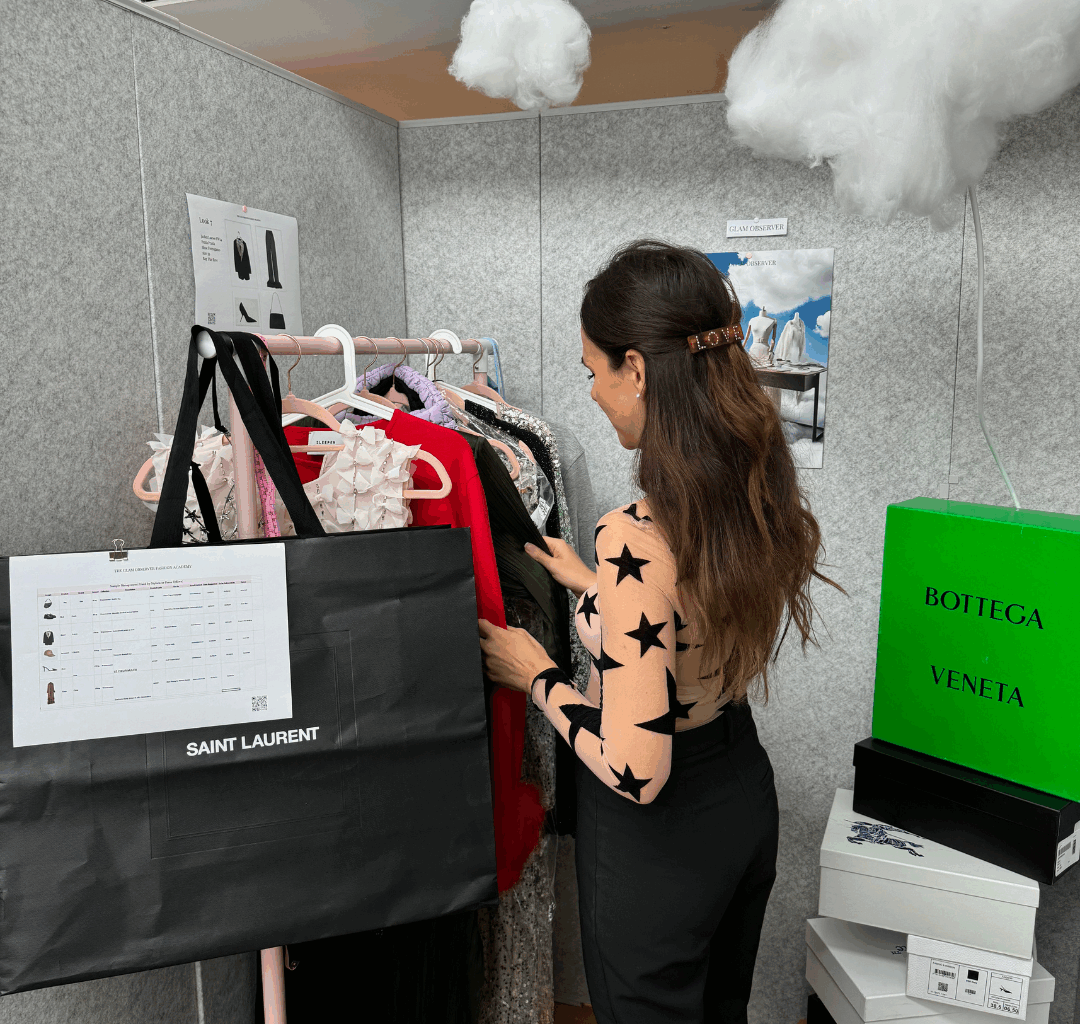
- They work closely with brands and designers to request samples (otherwise called “pulling clothes”) for photoshoots.
- Editorial stylists often pull inspiration from movies, books, and art to create thematic and artistic editorials.
In my Fashion Internship Simulator course, I run a masterclass called “Assistant Stylist for a Day” that explains all the nuances of an editorial stylist’s job and guides you on how to build a mock project for Vogue Italia that you can use in your portfolio (no previous knowledge or experience required!)
Personal Stylist
- A personal stylist works one-on-one with a specific client. Their role is to help them find their signature style and curate their wardrobe for daily life and/or special occasions that reflect their personal/professional branding.
- Personal stylists are usually self-employed. They have to build their online presence and network to find clients and build their name.
Celebrity stylist
- This role is similar to that of a personal stylist, the difference being that a celebrity stylist works with high-profile clients.
- They curate looks for everything from everyday outfits to red carpet looks, and collaborate with brands and the press.
In this interview I conducted with Holly Ounstead, who worked with stars such as Leona Lewis, Little Mix, and Kimberly Wyatt, as well as magazines such as Marie Claire and Glamour, she shared about her journey as a stylist and explained what the process of styling looks like when working with her clients.
E-commerce styling: an overlooked but in-vogue career
We tend to think of fashion stylists as people who work on set, but nowadays, e-commerce has brought digital stylists as well.
- Their work sits at the intersection of fashion styling, merchandising, and digital marketing.
- They ensure products look appealing, consistent, and on-brand in online stores.
- Unlike editorial stylists whose goal is more to make us dream, the goal of the e-commerce stylist is to style looks in ways that help customers imagine wearing the products in real life and buy them.
E-commerce is still an overlooked, but fantastic career opportunity as it opens even more possibilities compared to traditional styling roles.
Fashion Stylist Responsibilities
As we saw, a stylist’s responsibilities can change depending on the client and the specific project they are working on. However, these are some of the most common tasks a stylist is usually assigned:
- Curating looks: Choose clothing, shoes, and accessories and curate looks that align with the brand identity, the mood of the commercial or editorial shoot, or personal taste and needs of individual client
- Research: Create lookbooks, mood boards, or styling decks
- Trend Analysis: Attend runway shows, brand showrooms, and various fashion industry events to keep in touch with the latest trends
- Pulling & Sourcing: Borrow (“pull”) clothing and accessories from designers, brands, or PR showrooms, keep track of the inventory, and manage returns
- Outfit Coordination & Fittings: Organize fittings with clients and models, and make adjustments
- Collaboration with Creative Teams: Partner with photographers, makeup artists, hair stylists, designers, and art directors
- Logistics & Administration: Manage budgets and schedules for shoots, events, or ongoing client needs
Do You Need a Fashion Degree to Be a Stylist?
A common misconception is that you absolutely need to attend a fashion school or take a degree in fashion styling to become a stylist. This is not the only path.
If you don’t want to take a fashion styling degree or you have already graduated in something else, it’s okay. You can still become a stylist.
I once interviewed Camila Rizzolo during a photoshoot in Milan who works as a freelance fashion stylist at Vogue Japan. When I asked her how someone becomes a fashion stylist, even though she studied Fashion Styling, she shared from her personal experience this precious insight: “You do not become a stylist, not even with a degree in Fashion Styling or any other course either. It is a passion, something innate that you have always carried inside. A fashion course is something that can complete your passion, it can make it more concrete, it can refine certain techniques and deepen certain knowledge, but it all starts with you.”
Other ways you can learn about fashion styling:
- Watch fashion shows through a professional lens, analyzing looks and trends
- Study campaigns, editorials, red carpets, social media, and anything where there are styled looks to train your eye, learn the different styling techniques, and develop your own taste.
- Learn through practice by building a portfolio project (like the one I teach in my Masterclass “Assistant Stylist for a Day”) or take a short online course.
Skills Needed To Be A Fashion Stylist
Being a stylist is a glamorous career, but it is also very demanding and unpredictable.
Organizational Skills
- Styling is 20% glamour, 80% logistics.
- It’s NOT just about curating looks, but the whole process that leads to it: pulling looks, managing fittings, keeping a shoot organized, and so on. You’ll also steam, pin, carry garment bags through the rain, and label accessories until 2 a.m.
- At the beginning of your career, it’s unlikely that you will style looks yourself (which is the most fun part of the job), but rather help another stylist manage all those things. That’s why the #1 quality they’re looking for in interns and assistants is organizational skills.
Problem-Solving
- Last-minute requests and emergencies are the daily reality of any fashion stylist.
- You can request a sample from a brand and not receive it in time, so you’ll need to find a replacement quickly. Or an item can get damaged, stolen, or lost, and you’ll have to find a solution.
- It’s important to face problems calmly and proactively.
Communication skills
- Verbal communication skills: being able to ask your clients the right questions and listen to their needs while communicating your personal vision to them.
- Written communication skills: write pull letters to request samples or for any communication with the client.
- Creative expression: styling is never random; it always carries a message, and it’s important to understand it and translate a brand’s aesthetic, the editorial theme, or the individual client’s personality.
Attention to detail
- Develop your eye constantly. Stylists are judged by taste. The sharper your eye, the faster people will trust you.
- As a styling intern or assistant, you’ll need to support them with your eye for details – that’s what they have less time for.
- Whether it’s a garment malfunction or an unreported sample on the Excel spreadsheet, you must ensure everything is organized, clean, and tracked.
Curiosity
- Styling is not just about developing taste and that’s it. Successful stylists constantly look for new inspiration.
- They attend showrooms, emerging designer shows, and cultural programs to seek inspiration.
- The more curious you are about fashion and connecting fields like music, dance, and art, the more styling ideas you will have.
Networking
- The number of projects a stylist gets and their success largely depend on their relationship and communication with people.
- Networking is especially important for freelance stylists who find their own clients.
- Even when you’ll be just a styling intern or assistant, try to get in touch with everyone you’ll work with at every styling project: from the photographer to the model, other stylists on set, or even fellow assistants.
How to start your career as a fashion stylist?
Every stylist I’ve spoken to over the years told me this: Start as an assistant.
Every stylist you admire started by assisting.
So the best way to start your fashion career as a stylist is to look for styling internships or become a stylist’s assistant. It’s the ultimate entry point into editorial, commercial, or celebrity styling.
Stylists indeed don’t work alone. They rely on assistants to:
- Research designers & brands that fit the mood board
- Pull references from past collections or showrooms
- Suggest pieces that match the story the client wants to tell
- Request samples and keep track of their deliveries and returns
- Packing and unpacking clothes
- Organizing styling decks, closets, racks, and ironing garments
How to get a styling internship or become a stylist assistant without experience?
- Look for styling internships or assistant positions open online at brands or magazines
- Cold e-mail stylists you find on Instagram and LinkedIn, asking if you can assist with anything – even for a couple of hours per week or just for one shoot
- Volunteer backstage at fashion weeks
Where to Find Fashion Styling Internships
- Official brand websites: Filter by “assistant stylist” or “styling internship”
- LinkedIn: Use keywords like “fashion stylist internship”, “styling assistant”, etc.
- Cold emailing: Send a spontaneous application with a personalized resume, cover letter, and styling portfolio. Recruiters appreciate proactive candidates.
What to include in your styling application
- Tailor your resume with styling-related skills.
- Write a personalized cover letter that shows passion for this field.
- Build a portfolio with your own styled looks (for yourself, friends, or your favorite celebrity), or a mock editorial styling project for Vogue Italia where you build a mood board, source pieces, and write a pull letter (I teach it in my Fashion Internship Simulator)
How to Build a Styling Portfolio Without Experience
Do you want to add real experience to your CV and portfolio to impress fashion stylists and recruiters, but no one will give you that experience?
You don’t need to wait until you build connections or find your first styling internship or job to build experience. Instead, you can add a practical project to your portfolio that shows recruiters you can do the job NOW.
This is why I created the Assistant Stylist for a Day Masterclass on my Fashion Internship Simulator!
They aren’t theory. They’re real simulations, like stepping onto a set with a top stylist guiding you, only you’ll be executing everything from your laptop.
By the end, you won’t just say you want to work in styling. You’ll be able to:
✨ Show a finished styling project in your portfolio
✨ Prove to stylists you understand their world
✨ Walk into interviews with confidence, already familiar with the exact tasks assistants do
Stylists want proof. These masterclasses give you that proof. Enroll today.
FAQs About Fashion Styling
Is fashion styling the right career path for me?
Passion and skill for analyzing and putting together looks are not enough. Ask yourself if you’re ready to do all the unglamorous things, like carrying out logistics and solving problems. If you’re not afraid of those, you’ll make a great stylist!
Is it necessary to study fashion styling to become a stylist?
Absolutely not, you can study anything as long as you can demonstrate your passion and skills for styling. An eye for aesthetics and detail, and organizational and communication skills can be acquired in different situations – you don’t necessarily need to do a styling course to learn those.
What are the top skills to become a stylist?
Organization, problem-solving, and attention to detail are paramount skills, especially for interns and assistants who support senior stylists. Communication skills will help you maintain a good collaborative spirit in the team and find new clients and projects.
Where do I start my career as a stylist?
The best way to learn about fashion styling is in action. Find styling internships or reach out to stylists directly to offer your assistance.
How can I build a styling portfolio without experience?
You don’t need to have works from Vogue or Dior to build your portfolio. All you need now, if you don’t have any experience, is a laptop to build your own project at home, like my masterclass “Assistant Stylist for a Day” that simulates a real styling internship. For this reason I’ve also created the Fashion Internship Simulator, where you can create your own portfolio that makes you stand out!
Will fashion styling still be in demand with rising AI styling assistants?
AI styling assistants are growing fast, but they won’t likely replace all aspects of what fashion stylists do, such as creative direction, storytelling, and personal connections important in this job. However, stylists who learn to leverage AI (e.g., using it for mood boards, client previews, or scaling ideas) may actually become more valuable.
Final Thoughts: Is Fashion Styling Really Made for You?
Fashion styling goes way beyond outfit pairings, and the beautiful images and looks it gives cannot be the sole motivation to pursue this path. A career in styling needs readiness for responsibility, adaptability, and reactivity. If this doesn’t scare you, and you have the necessary skills (or are eager to develop them), then fashion styling can be the right and rewarding career for you.
The good news is that contrary to popular belief, you don’t need a fashion degree, connections, or experience at fancy companies to prove you’re ready to become a successful stylist!
That’s exactly why I created the Masterclass Assistant Stylist for a Day (part of the Fashion Internship Simulator online course), where you’ll complete a mock editorial styling brief for Vogue Italia as if you were a real intern! Interested? Register here.
Simulators, where you can create your portfolios and gain experience, are included in the fashion internship simulator. Just like a real internship, you’ll work on brand campaigns, lookbooks, and media plans. Enroll now!
Thank you for noting that a personal stylist’s job is to assist a client in developing their personal brand and style by selecting appealing outfits. My sister works in the business sector. She wants to look excellent in terms of her personality and style because she will be in front of the clients most of the time. To assist her in developing her individual look and brand, I will engage a personal stylist for her.
I was born for this space, I am always styling people and now I am ready to take this to the next level
I was born for this space, I am always styling people and now I am ready to take this to the next level, tell me more
I’m really happy to write this fashion environment is the one I always aspire, i want to work and accumulate more knowledge.
My passion for the fashion industry only grows stronger each day and I am constantly learning about styling, trends and I continue to build my portfolio. Looking for an opportunity to become an assistant to a well established fashion stylist and continue expanding my knowledge. https://swft.id/victoriajas