


Let’s be honest. When you’re trying to break into fashion, everyone tells you the same thing: “You need experience.”
But what no one tells you is how to get that experience when every internship requires… experience. It feels like a loop you can’t escape. You send your CV, you wait, and you get no replies because you haven’t worked in fashion yet.
I’ve been there too. When I applied for my first internship at Alexander McQueen, I didn’t have any previous fashion experience. My degree wasn’t in fashion either. But what I did have was initiative, and that changed everything.
Today, I want to show you exactly how you can build fashion experience from scratch, even without an internship, and create a portfolio that proves to recruiters you already have what it takes to work in the industry.
1. Change the way you define “experience”
Experience in fashion doesn’t only mean working inside a fashion house. Recruiters want to see that you understand how the industry works, how PR campaigns are structured, how a collection is launched, how an editorial shoot is coordinated, or how a marketing team communicates a brand story.
That understanding can come from projects you create yourself.
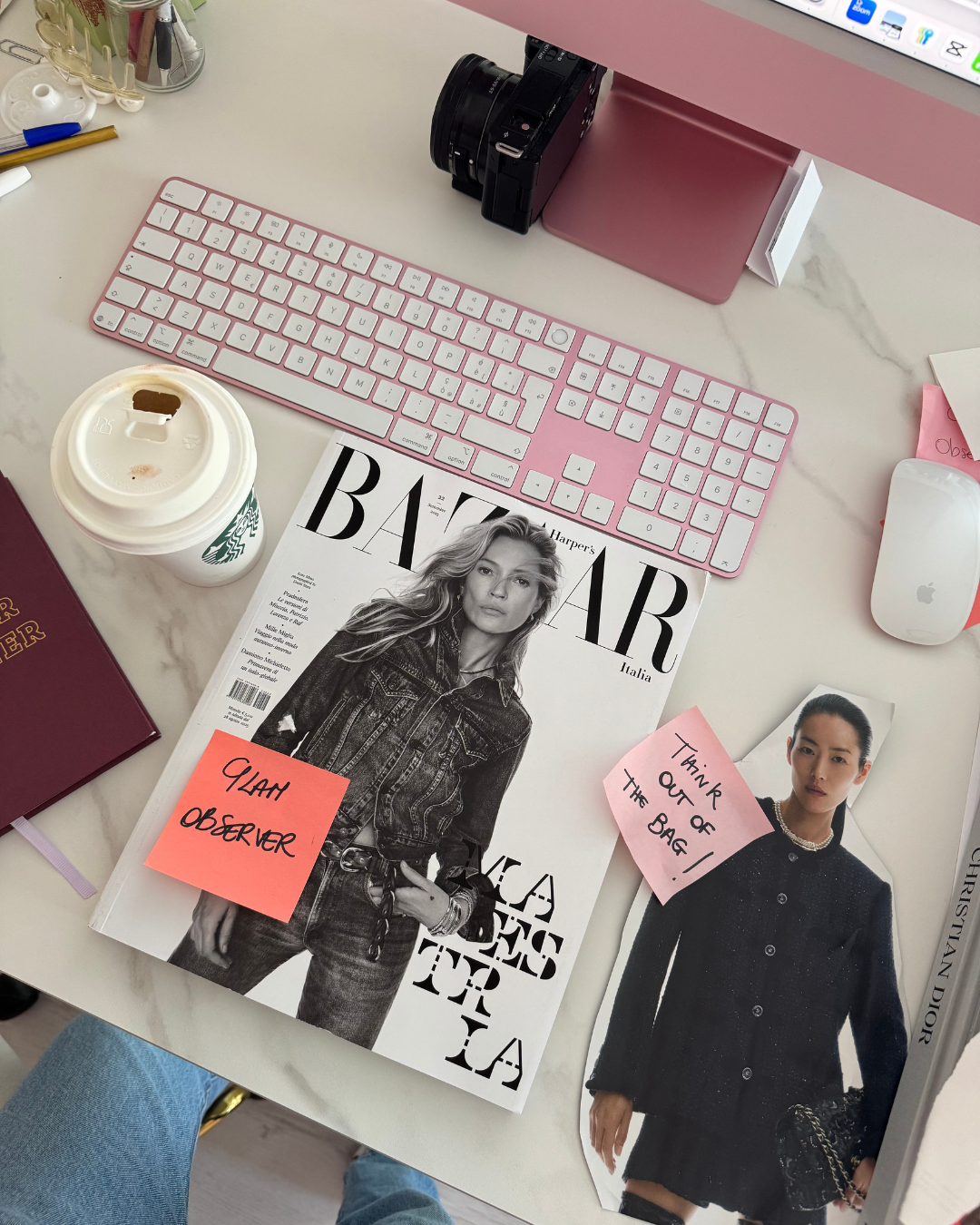
When I launched Glam Observer, it wasn’t because I already had experience in fashion. It was because I was curious and wanted to learn. That small project became my proof of initiative, and it helped me get my foot in the door.
You can do the same.
2. Create portfolio projects that mirror real fashion jobs
Think of this as being your own intern for a day or a week. The projects you create can show exactly what you’d be doing if you were already inside a fashion company.
Here are a few examples:
If you want to work in PR:
- Plan a launch for a fashion brand , pick a product, build a guest list, choose a location, and outline your influencer strategy.
- Write a short press release for your imagined event.
If you want to work in styling:
- Create three editorial looks inspired by a designer’s latest collection.
- Photograph them (or use digital moodboards) and explain the concept behind each.
If you want to work in marketing:
- Build a mini campaign for your favorite brand , write the concept, outline the social media plan, and identify key KPIs.
If you want to work in editorial:
- Create a mini magazine issue with a cover, a feature article, and an advertorial page.
These kinds of projects become your portfolio. They show recruiters that even if you haven’t worked in fashion yet, you already think and work like someone who does. For these reasons, I’ve created the Fashion Internship Simulator, where you can build your own portfolio and break into fashion.
3. Use internship simulators to build real, industry-ready projects
If you’re not sure how to structure those projects or what recruiters expect, that’s exactly why we created the Fashion Internship Simulator.
Inside the course, we simulate the exact kind of work you’d be doing as an intern or assistant in real fashion offices:
- You’ll plan a global PR launch for Miu Miu x New Balance (developing press and influencer strategy).
- You’ll create a retail activation project for Saint Laurent Rive Droite (marketing and brand strategy).
- You’ll step into the role of Assistant Stylist on a Vogue Italia editorial (organizing samples, preparing looks, and coordinating shoot details).
These projects give you hands-on experience you can add to your resume and talk about in interviews , even before your first internship.
When recruiters see that you’ve done this kind of work, they immediately recognize that you’re serious, proactive, and already prepared for the job.
4. Document everything in your portfolio
Once you’ve completed your projects, organize them in a simple portfolio. It doesn’t have to be a fancy website , a clean PDF works perfectly.
Include:
- A short introduction about you and your career goal.
- Each project with visuals (screenshots, images, layouts, or mock-ups).
- A brief explanation of what you did and what you learned.
- Optional: a section for inspiration boards or personal projects that show your style.
Your portfolio is more than a visual presentation , it’s your story. It shows how far you’ve already come, even before landing your first job.
5. Update your resume with your new “experience”
Once you’ve built your projects, don’t leave them hidden. List them in your “Experience” section just like you would an internship.
For example:
Assistant Stylist (Simulation Project – Vogue Italia)
Break Into the Fashion Industry Course
– Coordinated sample tracking for six looks across two editorial shoots
– Built pull letters and look boards inspired by Vogue Italia’s brand identity
– Developed strong attention to detail and problem-solving under tight deadlines
These descriptions tell recruiters that you’ve already practiced what they need.
6. Start applying with confidence
Now, when you apply for your next internship or assistant role, you’re not sending an empty CV. You’re sending proof that you’ve already worked on industry-level projects , even if they were simulations or self-initiated.
This is how my students start receiving interviews after weeks (sometimes months) of silence. They stop waiting for someone to give them permission to get experience, and they create it instead.
7. Your next step
If you’re ready to stop waiting for your “first opportunity” and start building your fashion experience right now, join our Break Into the Fashion Industry course
You’ll:
✅ Build a resume and cover letter that finally get replies
✅ Learn how to cold email fashion recruiters directly
✅ Gain access to our private community for feedback and mentorship
Because experience doesn’t only come from being hired. It starts the moment you take initiative , and we’ll show you exactly how.
👉 Join Break Into the Fashion Industry
Not ready for the course yet? Start from this free webinar
If you want to create real projects for your future in fashion, join the Fashion Internship Simulator. You’ll create 4 real portfolio projects (PR, Marketing, Editorial, Styling).