


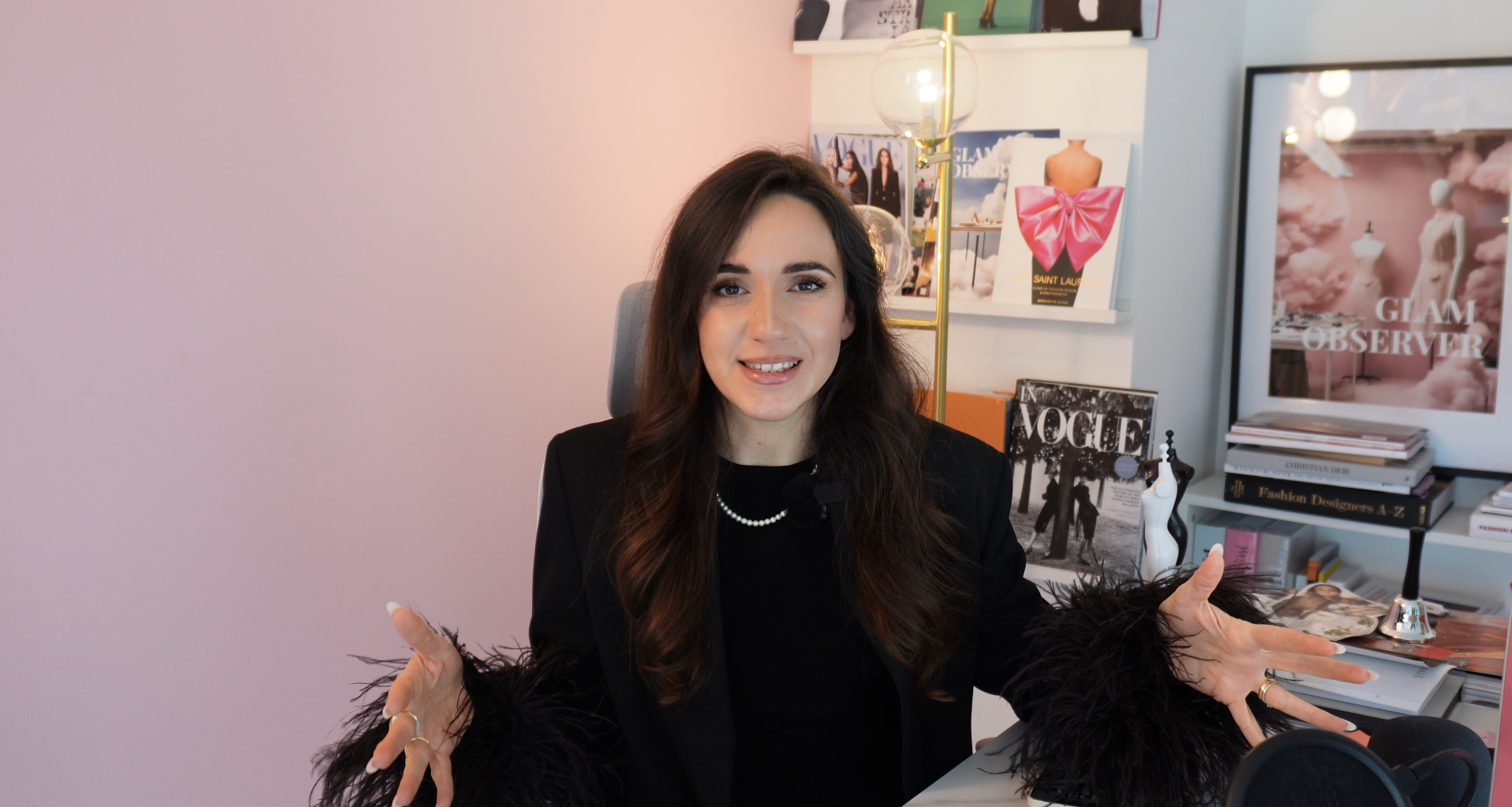
Let’s talk about something that almost everyone trying to break into fashion experiences…
Rejection.
You apply to 10 jobs.
Then 20.
Then 50.
You refresh your inbox every day hoping for good news.
And instead you see emails like:
“Thank you for your application, however we decided to move forward with other candidates.”
Or worse… nothing at all.
If you’re going through this right now, you are not alone but the good news is that rejection does not mean you are not good enough to work in fashion.
In fact, many talented people get rejected simply because they are following outdated job search strategies.
I’ve been exactly where you are.
When I first started trying to break into the fashion industry, I genuinely believed I wasn’t enough.
I didn’t have a fashion degree. I had studied management engineering, which felt completely unrelated to the fashion world I wanted to enter. Every job description seemed to ask for fashion school graduates, industry experience, or connections I simply didn’t have.
So I thought the solution was simple: get another degree.
I moved to Milan and enrolled in a master’s in luxury fashion management, convinced that this would magically open the doors of the industry.
But it didn’t.
Adding the master to my resume didn’t work. Companies were still rejecting my applications.
That was a difficult moment because I started thinking the problem was me. Maybe I wasn’t talented enough. Maybe I didn’t belong in fashion.
But then something interesting happened.
Instead of sending more applications the same way, I decided to completely change my strategy.
I stopped relying only on the traditional things everyone was doing: sending the same CV everywhere, waiting for replies, hoping someone would notice me.
I started focusing on something different.
Standing out.
Showing initiative.
Doing things other candidates weren’t doing.
Going beyond the basic application process.
And the results surprised even me.
After changing my approach, I applied to three internships.
I got all three offers.
Eventually, I chose the one at Alexander McQueen, which became my entry into the fashion industry.
That experience is exactly what inspired me to start teaching job search strategies through Glam Observer.
Over the past years, I’ve helped thousands of students and aspiring professionals break into fashion using the same foundation that worked for me.
Of course the industry has evolved. Hiring processes are more digital, recruiters use AI screening tools, and competition is even higher today.
But the core principle of my method still works:
You don’t break into fashion by doing only the traditional things everyone else is doing.
You break in by showing recruiters that you already think and act like someone who belongs in the industry.
And if companies keep rejecting your applications right now, there’s a good chance the problem isn’t your talent or your potential.
It’s simply your strategy.
But the good news?
Once you understand how modern hiring works, you can change your strategy and dramatically increase your chances of getting interviews.
In this article, I want to show you what to do if companies keep rejecting your job applications, especially if your dream is to work in fashion.
These strategies are based on:
- how recruiters actually screen candidates today
- insights from modern hiring practices discussed in publications like Harvard Business Review and Forbes
- what I’ve personally seen work for Glam Observer students entering the fashion industry
Let’s start with the most important shift you need to make.
1. Stop Applying Like Everyone Else
Most job seekers follow the same process:
Find job → send CV → wait.
The problem is that recruiters now receive hundreds or even thousands of applications for a single role.
That means most candidates are eliminated before anyone even reads their resume.
Modern hiring systems use Applicant Tracking Systems (ATS) to scan resumes for keywords and experience. If your resume doesn’t match the system’s criteria, your application may never reach a recruiter.
This is one of the reasons many candidates feel like they are applying everywhere but hearing nothing back.
And here’s the truth most people don’t realize:
Applying online should not be your main strategy.
It should be one piece of a broader approach.
If you want to stand out, you need to make recruiters notice you outside the application portal.
Here are two modern strategies that work much better.
Reach Out Directly to Hiring Managers
Instead of waiting for recruiters to find you, introduce yourself.
Many students, recent graduates and career switchers land roles by contacting the hiring manager or team directly on LinkedIn or email.
This doesn’t mean sending a random message asking for a job.
It means:
- introducing yourself
- showing genuine interest in the brand
- briefly explaining how your skills could contribute
For example:
“I recently developed a retail activation concept inspired by Saint Laurent Rive Droite during a marketing simulation project. I would love to contribute similar ideas to your team.”
This kind of message immediately makes you stand out from the hundreds of anonymous applicants in the system.
Inside the Break Into the Fashion Industry course, we teach students how to identify the right contacts and write these outreach messages step-by-step.
Because once recruiters know who you are, your application stops being just another CV in a database.
2. Tailor Your Resume to the Position (and Make It Interactive)
One of the biggest mistakes I still see candidates make is sending the same resume to every company.
In 2026 this simply doesn’t work anymore.
Recruiters and applicant tracking systems scan resumes looking for specific keywords that match the job description. If your CV doesn’t reflect the language used in the role you’re applying for, your application may never even reach a human recruiter.
So the first rule is simple.
Your resume should always be tailored to the position.
Read the job description carefully and mirror the keywords they use.
For example:
If the role mentions:
- influencer campaigns
- market analysis
- competitor research
- fashion event coordination
Those words should appear in your resume when relevant.
But tailoring your resume goes beyond just adding keywords.
You also need to prove every skill you claim.
Today anyone can create a polished CV with AI tools. Recruiters know this. A nice layout and fancy wording are no longer enough.
What makes a resume credible now is evidence.
Every skill should be backed up by a concrete example such as a project, course, or previous experience.
For example, instead of writing:
“Strong knowledge of fashion marketing.”
Show the proof.
You can do this with bullet points that explain what you actually did.
Example:
Fashion Marketing Project – Brand Collaboration Strategy
• Developed a global PR launch plan for a hypothetical Miu Miu x New Balance collaboration
• Identified key influencers and created a seeding timeline across European and US markets
• Conducted competitor analysis of sneaker collaborations from luxury brands
Even your courses can include bullet points.
Many candidates simply write:
“Break Into the Fashion Industry Course – Glam Observer Academy”
But this doesn’t tell recruiters anything about your skills.
Instead, turn your course projects into real professional experience.
Example:
Break Into the Fashion Industry – Fashion Internship Simulator
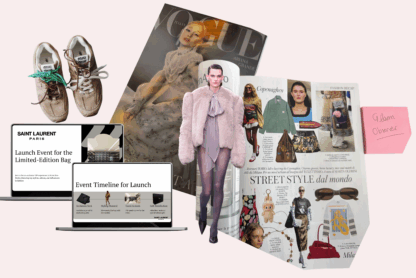
• Created a retail activation concept for Saint Laurent Rive Droite to launch a limited-edition bag
• Planned influencer guest list and press outreach strategy for VIP launch event
• Designed a post-event digital amplification strategy for Instagram and TikTok
Now here is the step most candidates are still missing.
Make your resume interactive.
Instead of just describing projects, add links directly in your bullet points.
Link to:
- portfolio projects
- presentation slides
- PDFs of your work
- campaign concepts
- editorial projects
For example:
Retail Activation Project – Saint Laurent Simulator
• Designed immersive in-store activation concept (view project)
When a recruiter clicks that link and immediately sees the work you created, your application becomes much more powerful.
You are no longer just telling them you have skills.
You are showing them.
And in today’s hiring landscape, proof always wins over claims.
Create a One-Minute “Resume Video” on Instagram, TikTok, or LinkedIn
Here is an unconventional strategy that works surprisingly well.
Create a one-minute video resume and post it on Instagram, TikTok, or LinkedIn.
Think of it as a short pitch about yourself.
You could say something like:
“Hi, I’m Giada and I’m looking for a marketing internship in fashion. I recently worked on a Saint Laurent retail activation concept where I planned an immersive launch event for the Rive Droite store. I love combining creativity with brand strategy and I would love to bring that mindset to your team.”
Then include:
What role you’re applying for
The project you worked on (aka your portfolio)
Why you’re excited about the company
After posting the video, you can:
send the link to recruiters
add it to your job application
share it on LinkedIn
tag the brand or recruiters when appropriate
This strategy works because it shows something recruiters rarely see:
initiative.
You’re not just sending another CV.
You’re introducing yourself as a person.
And in creative industries like fashion, personality and energy matter just as much as experience.
One of the most common things I hear from aspiring fashion professionals is:
“I can’t get a job because I don’t have experience.”
But the truth is that you don’t (and you should not) always have to wait for a company to give you experience.
You can create it yourself.
Recruiters are not only looking for formal internships. What they really want to see is whether you understand how the industry works and how you think when solving real problems.
So instead of waiting passively, start building projects that simulate the type of work you want to do.
For example:
If you want to work in fashion marketing, you could create a campaign concept for a luxury brand launch.
If you want to work in PR, you could build a press strategy for a new collection or collaboration.
If you want to work in editorial, you could produce a mini digital magazine or write trend analysis articles.
If you want to work in styling, you could create editorial looks based on runway collections and build a styling concept around a theme.
These kinds of projects demonstrate something extremely important to recruiters:
initiative.
Instead of saying “I want to work in fashion,” you’re showing that you are already thinking and working like someone in the industry.
And when you present these projects in your resume or portfolio, recruiters can actually see how you approach creative and strategic problems.
If you want structured guidance while doing these types of projects, that’s exactly why I created the Fashion Internship Simulator inside Glam Observer Academy. It walks you through real tasks that professionals do in marketing, styling, and editorial roles so you can build portfolio projects even before landing your first internship.
But whether you use a simulator, a university assignment, or your own personal project, the key idea is the same:
Don’t wait for experience. Create it.
3. Film a Video Cover Letter (This Is Becoming a Huge Advantage)
Let’s talk about something that is becoming more and more powerful in job applications.
Video.
Now that AI can write resumes and cover letters in seconds, many applications are starting to look the same.
Recruiters are receiving hundreds of perfectly written cover letters.
But very few candidates are willing to show up on camera.
A short video cover letter can instantly make your application more memorable.
It doesn’t have to be complicated.
Even a simple 60–90 second video filmed on your phone can work.
Here’s a structure that works well:
Introduce yourself
Explain why you are passionate about the brand
Mention a project or experience relevant to the role
Explain why you would be a strong addition to the team
For example:
“Hi, my name is ___ and I’m currently preparing to start my career in fashion marketing. Recently I worked on a Saint Laurent retail activation project where I designed an in-store experience for the Rive Droite concept store. I’m passionate about how luxury brands create cultural moments around product launches, which is why I would love to contribute to your marketing team.”
Then you simply include the link to your video in your application.
It shows:
confidence
communication skills
initiative
And most importantly, it makes recruiters remember you.
4. Build a Portfolio Even If You’re Not a Designer.
If you’ve been sending applications and not hearing back, one of the first things I recommend checking is this:
Do you have a portfolio?
Because today, especially in fashion, a portfolio is often more important than a resume and cover letter.
Think about it from a recruiter’s perspective.
A resume tells them what you claim you can do.
A portfolio shows them how you actually think and work.
This is why candidates with a strong portfolio often get interviews faster, even if their resume is shorter.
Portfolios are valuable for almost every fashion career.
If you already have a portfolio but you’re still getting rejected, the issue might not be the existence of the portfolio.
It might be the type of projects inside it.
Many portfolios fail because the projects are:
- too generic
- not related to the role
- purely academic without industry thinking
- visually messy or hard to navigate.
Your portfolio should feel like something a professional in the industry would produce.
Ask yourself:
Do these projects demonstrate the kind of work someone in this role actually does?
For example, a fashion marketing portfolio shouldn’t just show moodboards. It should show campaign thinking, strategy, and brand understanding.
The more your projects reflect real industry tasks, the easier it becomes for recruiters to imagine you already working in that role.
And that is exactly what makes a portfolio powerful.
5. Learn The Skills Fashion Companies Actually Use
Another reason applications get rejected is simple:
Many candidates lack the practical skills companies expect.
One of the most common examples?
Yes, Excel.
I know that might sound surprising if you imagine fashion careers as only creative roles.
But in reality, most professionals spend a large portion of their time analyzing data, organizing product lists, planning campaigns, and tracking performance in spreadsheets.
Buyers analyze product performance.
Marketing teams track campaign metrics.
Stylists organize samples and production schedules.
Understanding Excel is often one of the first technical skills recruiters expect from entry-level candidates.
In fact, when I interviewed for my first internship at Alexander McQueen, I was given an Excel test during the recruitment process.
6. Show The Right Attitude (Recruiters Notice It Immediately)
Technical skills matter.
But attitude matters just as much.
Fashion companies often hire candidates with the right mindset even if their experience is limited.
Recruiters look for qualities like:
- proactivity
- curiosity
- problem-solving
- attention to detail
- willingness to learn
During one of my early interviews, I mentioned that I had subscribed to the company newsletter and even noticed a broken link on their website.
The recruiter was impressed by that initiative because it showed genuine interest and attention to detail.
This type of proactive thinking is exactly what companies look for in junior hires.
Fashion is a fast-paced industry.
People who take initiative and solve problems quickly are incredibly valuable.
7. Don’t Let Rejections Kill Your Motivation
Let’s be honest.
Job searching can be emotionally exhausting.
You may start questioning yourself.
You might feel like everyone else is getting opportunities while you’re stuck.
But remember this:
Even successful fashion professionals faced rejection at the beginning.
Staying motivated during your job search is essential because persistence often makes the difference between those who break into the industry and those who give up too soon.
Instead of seeing rejection as failure, treat it as feedback.
Ask yourself:
- Is my resume strong enough?
- Do I have real projects to show?
- Am I applying strategically or randomly?
Every improvement brings you closer to the right opportunity.
If companies keep rejecting your job applications, it doesn’t mean your dream career is out of reach.
Most of the time, it simply means your strategy needs to evolve.
Modern job searching is no longer just about sending resumes.
It’s about:
- building proof of your skills
- creating portfolio projects
- developing industry-relevant abilities
- connecting directly with professionals
When you shift your approach, the results can change dramatically.
I’ve seen this happen again and again with students inside the Glam Observer community.
People who once felt completely stuck eventually landed internships at brands, magazines, and agencies they had dreamed about for years.
So if you’re feeling discouraged right now, remember this:
Your rejection today could simply be the beginning of the strategy that leads you to the right opportunity tomorrow.
And I truly believe that if you stay curious, proactive, and persistent, you can absolutely build a career in fashion.