

Fashion Week is here.
Today New York Fashion Week kicks off, and I cannot help but go back to a younger version of myself sitting at a tiny desk in Southern Italy, far away from the fashion capitals.
If you are new here, I was born and raised in the south of Italy, in a place where fashion was not exactly “a thing.” There were no showrooms around the corner. No castings. No stylists rushing between appointments. Just me, my university books in management engineering, and a dream that felt bigger than my geography.
But when Fashion Month arrived, everything changed.
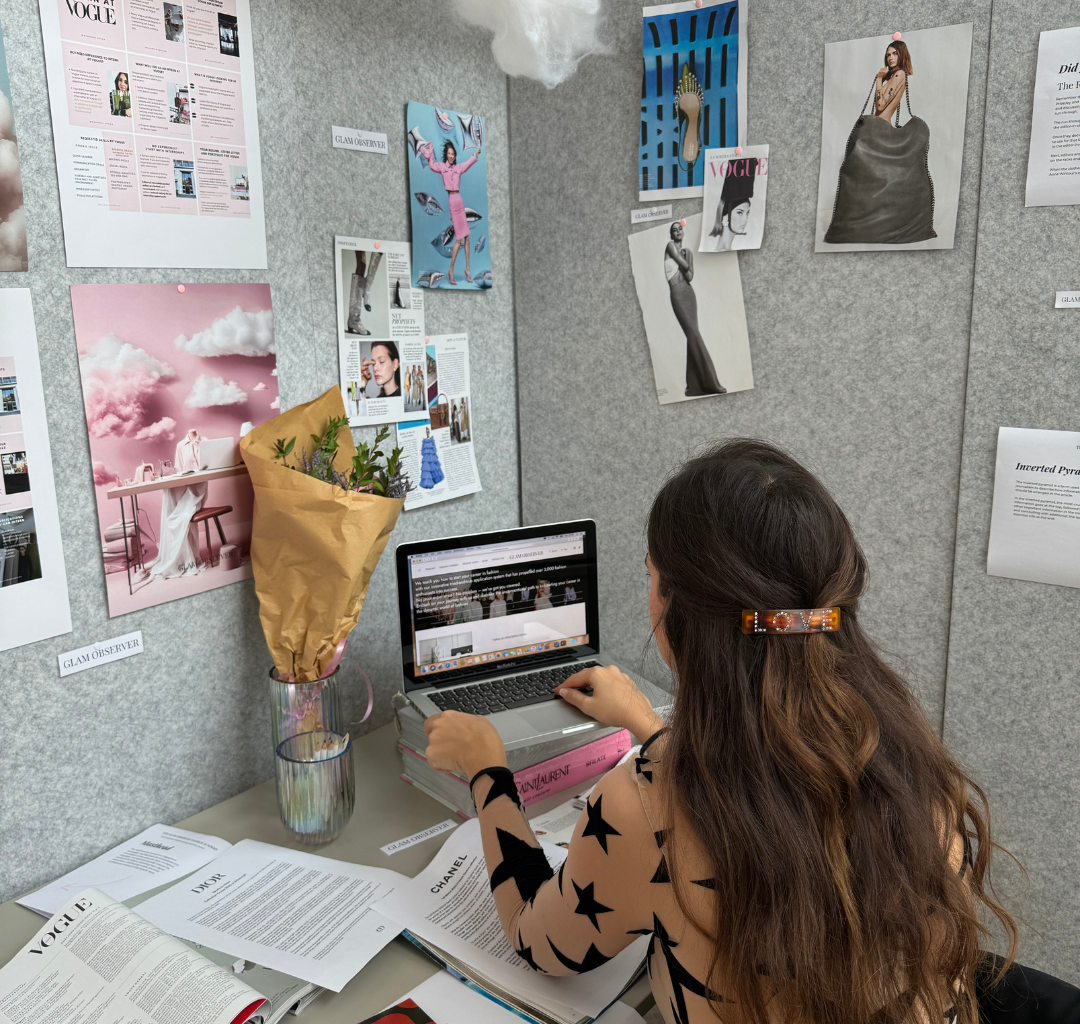
I used to print out the full calendars of New York Fashion Week, London Fashion Week, Milan Fashion Week, and Paris Fashion Week. I would pin them to my fashion moodboard. I had them on my desk like they were sacred documents. I scheduled “appointments with myself” at the exact time my favorite brands were showing. I watched every runway, downloaded looks, took notes, and then wrote mini reports on an old-fashioned blog I had created between my engineering classes.
If you love Fashion Week but feel like you are watching from the sidelines, this article is for you. This season, I want you to stop being a passive spectator and start treating Fashion Month as your personal Fashion Week Career bootcamp.
Because here is the truth: fashion companies do not only look at your degree. They look at your initiative. They look at your mindset. They look at whether you are proactive outside the office. If you do it on your own, they know you will do it at work too.
Confidence comes from competence. And competence comes from knowledge.
Just like when you walk into a university exam. You feel calmer when you have studied every chapter. The same goes for your fashion career. Confidence is not a personality trait. It is a skill. And Fashion Week is the perfect training ground.
I remember that once I was then inside the industry at Alexander McQueen, Kering, Yoox-Net-A-Porter, with my colleagues we used to schedule meetings to watch the 10-minute shows together. Yes, actual meetings in our calendars.
We would gather to watch and then immediately analyze and comment on different aspects of the collections. We looked at the brands we were directly working on, but also at the others within the group. Kering is the group that includes Saint Laurent, Gucci, Bottega Veneta, Balenciaga, Alexander McQueen…so of course we were closely observing what was happening inside the group.
But we were also looking at other major houses like Dior and Prada, especially when there were new creative director changes or when we had to analyze competitors more deeply.
It was fun, of course. I mean, who wouldn’t want to watch fashion shows as part of their job?
But it was also work.
Fashion is a serious business. Yes, you watch shows. But you also analyze, compare, build reports, work on numbers, open Excel, and translate those 10 minutes of runway into strategy.
So as someone who used to analyze shows inside a fashion office but who also knows what it feels like to watch fashion from her bedroom and wishing to have access to it, here are the things I recommend you start doing from home.
If you want, I’ve talked about this on my YouTube Channel:
1. First, Understand What a Fashion Show Really Is
Most people watch a runway and think: beautiful clothes.
Fashion professionals watch a runway and think: strategy.
A show is never just about garments. It is a business tool. It sets brand direction, communicates positioning, influences buyers, attracts press, and moves stock.
When I was working at Alexander McQueen, Fashion Week was followed by:
- Internal debrief meetings
- Competitive analysis
- Cross-department strategy discussions
- Excel reports
So before you watch your first show this season, ask yourself: What is the objective behind it? Who are the people running the shows, working behind the scenes? How many steps are needed to produce a show? What about the music choice, the lights, and the seating plan?
Historically, fashion shows evolved from intimate salon presentations. Charles Frederick Worth is credited with being one of the first designers to present garments on live models rather than mannequins. From there, shows became theatrical, then global, then digital.
Today, they are content machines.
Understanding this evolution already puts you ahead.
2. Watch Shows Through the Lens of Your Dream Job
Fashion shows are not the same through the lenses of different professionals. Once you are inside the industry you won’t just look at the clothes, different professionals look at differen things.
Do not watch shows as a fan. Watch them as the professional you want to become.
If You Want to Be a Buyer
- What are the commercial pieces versus the statement runway looks?
- Which items will actually sell in-store?
- What price positioning clues can you detect?
- Is the brand targeting a younger or older client this season?
Buyers are not seduced by drama. They are calculating sell-through.
If You Want to Work in Merchandising
- How many times is a specific silhouette repeated?
- What categories are dominant? Outerwear? Knitwear? Accessories?
- Is there a clear hero product?
If You Want to Work in Marketing or PR
- What is the narrative?
- What headline would you write?
- How does the venue reinforce the message?
- Is there a cultural moment attached?
For example, when a house like Chanel recreates a supermarket or beach setting, that is not random. It gives immense material to the Marketing and PR department. If you’d like to know more about the departments in fashion, I’ve created a full FREE PDF guide that explains every field.
If You Want to Be a Stylist or Editor
- Which looks have editorial potential?
- How are accessories styled?
- Which outfits could realistically appear in Vogue?
- How do proportions photograph?
Inside our Assistant Stylist simulation, inspired by a Vogue Italia editorial workflow, students learn exactly how to break down looks, request samples, and think in terms of mood boards and storytelling.
You can practice this now, from your bedroom.
Pick one show. Write a one-page analysis as if you were reporting to your boss tomorrow morning.
That is how you turn watching into training.
3. Create Your Own Post-Fashion Week Debrief
At the end of each city, do not just move on.
Debrief.
Choose one of these approaches:
Option A: City Debrief
At the end of New York Fashion Week, summarize:
- 5 dominant trends
- 3 brands that shifted positioning
- 1 surprise moment
Option B: Competitor Analysis
Compare two brands.
For example: Dior vs Chanel.
- Who leaned more into heritage?
- Who experimented more?
- Which felt more commercial?
Write it like an internal memo.
When I teach marketing simulations, like the Saint Laurent Rive Droite retail activation project, I always tell students: strategy is built on observation.
Fashion Week is your data source.
4. Turn Runway Inspiration Into Portfolio Projects
Here is where most people stop. They watch. They post on Instagram. They move on.
You can go further.
Inspired by the “Editor-in-Chief for a Week” simulation, you can:
- Create a mini digital magazine based on Fashion Month trends
- Design a mock cover inspired by a cultural theme
- Write an editor’s letter explaining why this season matters
Or inspired by our marketing simulator:
- Create a 360° campaign proposal for a runway collection
- Plan a retail activation
- Outline influencer seeding strategy
Recruiters love tangible proof.
Inside Break Into the Fashion Industry, I teach how to transform these self-initiated projects into resume bullet points.
Instead of writing “Fashion enthusiast,” you can write:
“Produced a seasonal trend report analyzing 40+ runway collections across four fashion capitals, identifying 6 commercial macro-trends.”
See the difference?
5. Study the Industry Beyond the Runway
Fashion Week is not just about designers. It is about the ecosystem.
Follow:
- Editors
- Stylists
- PR agencies
- Buyers
- Show producers
Notice who is seated front row. Notice which influencers are repeatedly invited. Notice which brands collaborate with artists.
This is how you understand power structures.
If you truly want to work in fashion marketing, buying, PR, or merchandising, you must combine creative sensitivity with business awareness. And yes, that often means spreadsheets. As I explain in detail in our Excel-focused training, fashion professionals spend more time analyzing data than people imagine.
Fashion is creativity supported by numbers.
6. Build Your Confidence Intentionally
If you are sitting at home thinking, “Everyone else is in Paris, and I am here,” I want you to reframe that.
Geography is just a limit when you allow it to be.
I built my knowledge before I ever stepped into a fashion office. When I finally interviewed at Alexander McQueen, I was not confident because I lived in Milan. I was confident because I had studied the industry deeply from my bedroom.
Fashion Week can be your training ground.
Use it to:
- Practice analysis
- Improve writing
- Build portfolio material
- Develop strategic thinking
And remember something very important.
The industry notices initiative.
Recruiters can sense when someone genuinely cares. In fact, in many application reviews I have done, the difference between rejection and interview often comes down to personalization and depth .
Fashion Week gives you fresh material to personalize your applications.
Mention a recent show in your cover letter. Reference a brand’s new direction. Show that you are not disconnected.
Fashion Week Is Not Only for the Front Row
One day, you might be backstage. One day, you might be in the marketing office analyzing results. One day, you might be producing the show.
But today, you are at home.
And that is perfectly fine.
What matters is not where you sit during Fashion Week. It is how you use it.
When I was that girl in Southern Italy printing calendars and watching shows between engineering exams, I did not know that years later I would be working inside the industry.
But I was already training for it.
So this season, do not just watch.
Study. Analyze. Write. Create.
Turn Fashion Week into your personal masterclass.
Because breaking into fashion is not about waiting for an invitation.
It is about preparing yourself so well that when the invitation comes, you are already ready.
Here’s the link to start registering for the FASHION WEEK CAREER LAB.
4-Week Online Program During Fashion Month.